Also on the truck · Gig Harbor & both sides of the Narrows
The rest of the lineup
$99 to meter it, one figure on the ticket, coverage printed on the invoice — identical for every machine in Gig Harbor & both sides of the Narrows.
Towels still damp after a second cycle, a drum that squeals, air that never gets warm.
Weekdays 8–6 · Saturday 9–3 · closed Sunday · truck based on 4425 Harbor Country Dr NW
$99 to meter it, one figure on the ticket, coverage printed on the invoice — identical for every machine in Gig Harbor & both sides of the Narrows.
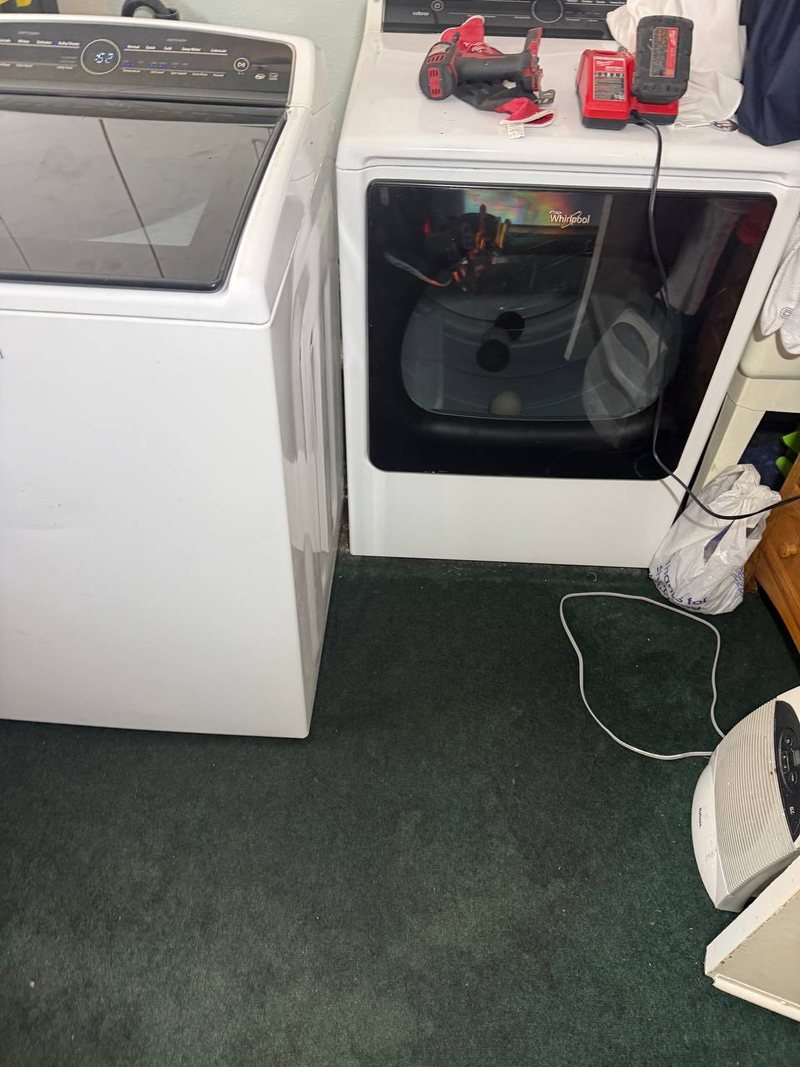
From October to May the air on both sides of the Narrows is close to saturated, and a dryer vent that runs out through a crawlspace or a long garage wall never fully dries between loads. Lint that a drier climate would blow straight out instead turns to paste and lines the duct. That is the background to most dryer calls we take, whether the machine is in a Swede Hill garage, a Fox Island utility room or a Fircrest rambler's back porch. Our shop is on Harbor Country Dr by the Hwy 16 interchange; Purdy, Port Orchard and Ruston Way are all on the daily route, and a Tacoma address carries no toll on the invoice.
Gas reaches Gig Harbor proper and Tacoma, so a dryer on Harborview Dr or N 21st St usually has a PSE line behind it. Out on Fox Island, Olalla and the Key Peninsula it is propane, and a gas dryer hooked up without the conversion runs rich and trips its flame sensor. Electric dryers dominate in the Uptown townhomes and the Point Ruston condos. A common story from a Canterwood laundry room: the dryer runs the full cycle, the drum turns, the clothes come out cold. Most of the time the cause is a blown thermal fuse, and the fuse blew because the vent was choked. We fix both, or the fuse blows again in a month.
Electric: a thermal fuse, an element whose coil has parted, or a 240-volt leg that has dropped out. Gas and propane: an igniter, a flame sensor or a coil pack on the gas valve. Each gets metered in sequence; whichever reads open gets replaced.
Airflow, almost always. Lint paste has narrowed the vent, the machine has been shoved back onto its flex duct, or the roof cap has stuck shut. Airflow gets measured at the exhaust, the reachable section gets cleared, and if the duct run itself needs a specialist you hear it plainly.
Drum rollers worn flat, a split glide, an idler pulley whose bearing has run dry, or a fraying belt. With the front off we turn the drum by hand, locate the noise, and renew every worn piece at once so the repair holds.
A broken belt, a seized motor or a door switch that thinks the door is open. On many models a broken belt trips a switch that also stops the motor. We check the belt and switch first, then the motor windings with the meter.
A cycling thermostat or high-limit that no longer opens, or lint packed near the heater box. On gas units, a burner that over-fires because the orifice is wrong for propane. We clear the heater area, test the thermostats and correct the gas setup.
Dryer-sheet film on the moisture sensor, a drifted thermistor, or a board with a dead relay. We read the code, clean and test the sensor bars, meter the thermistor and only then quote the board if it is the fault.
The technician begins at the wall: 240 volts on both legs for an electric dryer, gas pressure and a proper regulator for gas or propane. Then the front or top comes off and the meter moves through the heat circuit in order: fuse, high-limit, cycling stat, then element or igniter and flame sensor. Airflow is measured at the exhaust, because a fuse that blew for lack of air will blow again unless the vent is cleared. Rollers, glides, belt and idler are checked by hand while the drum is out. Then the failed part gets its ordinary name and one price goes on paper.
Whirlpool, Maytag, GE, LG, Samsung, Kenmore and Speed Queen make up most of the dryers we see, plus Miele and Bosch compacts in the stacked pairs around Uptown. For the shift crews at St. Anthony Hospital and Tacoma General we hold early and late windows. Second-home owners on the Key Peninsula and Fox Island see a picture of what failed, approve by text, then find the invoice and warranty in their inbox. Pricing is identical everywhere within reach of the shop: once you approve, the $99 diagnosis is absorbed into the repair figure, and should you decline it stands alone as the bill. A repair number appears only after the diagnostic, and it appears on paper.
Almost always worth repairing. The parts that stop heat, thermal fuses, elements, igniters and thermostats, are among the least expensive components in the machine, and the drum, motor and cabinet usually have years left. We write one number after the diagnosis and give you an opinion; when replacement makes more sense, you hear that from us.
We diagnose and correct propane setups on dryers that were installed without the conversion, which is common on Fox Island, in Olalla and on the Key Peninsula. That means the right orifice and the regulator set for propane. Should your model’s conversion kit be missing from the truck, we order one and fit it on a return visit, and that second trip adds nothing to the bill.
On every call we clear the reachable section of vent from the machine side and measure the exhaust airflow. For a long run through a townhome wall or a roof cap that needs ladder work, we report what we found and recommend a duct specialist rather than half-doing it.
Yes, daily. West End, North End, Ruston, Fircrest, Downtown and Northeast Tacoma are all inside the area, and the eastbound toll is ours to pay. A dryer in a Proctor basement is priced exactly like one on Harborview Dr: the same $99 diagnostic, the same written figure.
Inside the week, and often by the next business day, Monday through Saturday. A warm refrigerator takes the first same-day windows; a cold dryer is next in line. Tell us on the phone whether it is gas, propane or electric and the model if you can read it, so the likely parts are on the truck.
Phone or form, either way a dispatcher sends a two-hour window and a text the moment the truck rolls — from Harbor Country Drive, or off the bridge deck for Tacoma stops.
Clamp meter, thermometer, manometer where propane is involved. The failed component is identified and explained, and one figure goes on paper with the $99 built into it.
The truck carries what salt air, iron water and outages break: fill valves, defrost heaters, igniters, rollers, relays. Anything ordered comes back on our schedule, not your bill.
A complete run of the machine while you watch, the floor and panels put back as found, and the warranty term printed on the invoice.
$99 gets the meter on it, the figure goes on the ticket, the part is usually already on board, and the coverage term is printed on the invoice. Same card on both shores of the Narrows.