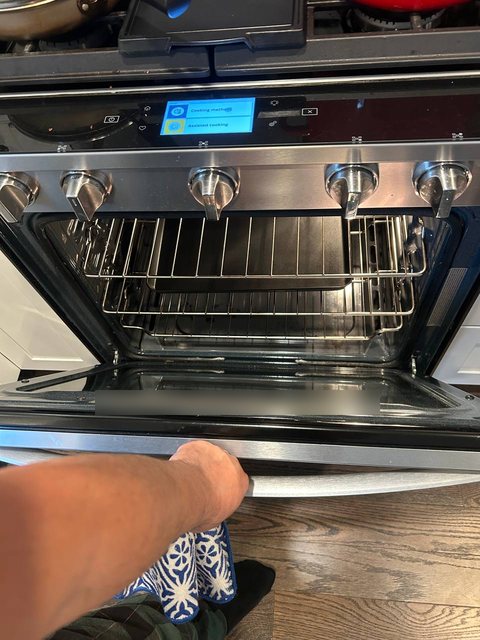
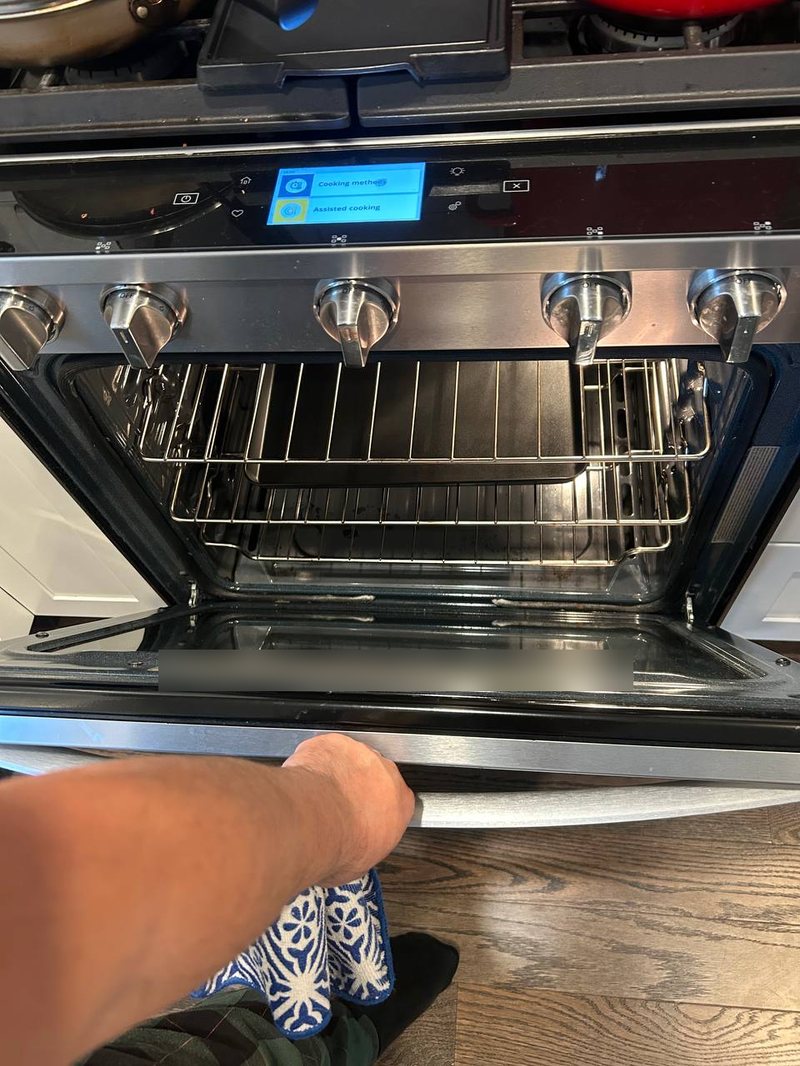
A Viking Professional range whose oven glows but never reaches 350, a burner igniter that sparks weakly, a built-in refrigerator running warm, or F3 on the display.
Weekdays 8–6 · Saturday 9–3 · closed Sunday · truck based on 4425 Harbor Country Dr NW
Refrigerator & Freezer Repair$99 diagnostic · one figure, written
Washer Repair$99 diagnostic · one figure, written
Dryer Repair$99 diagnostic · one figure, written
Dishwasher Repair$99 diagnostic · one figure, written
Oven, Range & Cooktop Repair$99 diagnostic · one figure, written
Ice Maker Repair$99 diagnostic · one figure, written
Viking was the range of the 2000s remodel, and the peninsula is full of them. Thirty-six and forty-eight inch Professional ranges and rangetops in the Point Fosdick and Artondale kitchens redone when the kids were small, the VDSC dual-fuel models in the Canterwood and Crescent Valley houses, and the built-in 36 and 42 inch Viking refrigerators that went in beside them. Over the bridge they turn up in the enlarged kitchens of Proctor and in a few Browns Point view homes. The pattern of failure is settled: oven igniters that glow yet never pull the amperage the safety valve needs, spark modules that click without stopping, sagging oven door hinges, and on the refrigerators, evaporator fans and defrost parts.
The peninsula adds its own troubles. A Viking on Fox Island or the Key Peninsula burns propane, and a range delivered with natural gas orifices, or a regulator never flipped, over-fires the burners and soots every pan; we see ranges that have cooked that way for a decade. Salt air off Carr Inlet and Colvos Passage corrodes spark electrodes and the terminals on the igniter harness. Well water in Artondale and Olalla scales the fill valve in a Viking refrigerator’s ice maker; the cubes shrink and turn hollow. And when PSE loses power in a November windstorm, the surge on return or a generator’s rough output can take out the oven control or the refrigerator board.
| Unit | Typical sign | Likely cause | Our fix |
|---|---|---|---|
| Professional gas ranges (VGR, VGSC) | Oven igniter glows, no flame, or flame comes late | Igniter drawing under spec so the safety valve does not open fully | Clamp the igniter current, compare with the valve threshold, replace the igniter, confirm ignition timing |
| Dual-fuel ranges (VDSC) | Oven slow, uneven, or shows an F-code | Bake element open, temperature sensor drifted, relay on the control board failing | Meter the element and sensor, read the code, test relay output, replace the part the readings name |
| Rangetops and cooktops (VGRT, VGSU) | Burner clicks continuously or one burner will not light | Electrode cracked or wet, spark module weak, burner cap off center | Test spark at each electrode, meter the module, dry and reseat, replace pitted electrodes |
| Built-in refrigerators (VCSB, VCBB) | Fresh food warm, freezer frosted, fan noise | Evaporator fan bearing, defrost heater or terminator, thermistor out of range | Meter the fan, heater and thermistor, clear the ice, run a forced defrost, verify temperatures |
| Viking dishwashers (VDW, VDB) | Will not drain, leaves food on plates | Drain pump jammed, wash pump worn, spray arm ports blocked on hard water | Clear the pump, check the wash motor amperage, clean or replace arms, run a full cycle |
| Refrigerator ice makers | No ice or a thin slab | Scale choking the fill valve, ice blocking the fill tube, the maker’s module timing out | Measure the fill, clear the frozen tube, fit a new valve or module, stay for one harvest cycle |
| Indicator | Meaning | Action |
|---|---|---|
| F1 | Oven control fault: the board or its keypad detected an internal problem | Cut power, retest, check the keypad connection and the control before recommending a board |
| F2 | Oven temperature exceeded the limit the control allows | Compare the sensor with a probe, check for a stuck heating relay, replace the failing part |
| F3 | Oven temperature sensor circuit reads open to the control | Meter the sensor and harness plug behind the oven, replace the sensor or fix the connection |
| F4 | Oven temperature sensor circuit reads shorted, so the control refuses to heat | Test the sensor resistance and inspect wiring for a rub-through, replace the shorted sensor |
| F7 | A key on the control panel reads as stuck or shorted | Clean around the keypad, check the ribbon, replace the touch panel if a key stays closed |
A Viking range is mostly iron and brass, so the diagnosis is about the few electrical parts that drive it. We start with the oven igniter on a clamp meter, because a glowing igniter that draws too little current is the most common Viking fault on the peninsula and it fools people into buying valves. Then manifold pressure on a manometer, spark at every electrode, sensor resistance against the chart, and on a dual-fuel model the stored F-code and the relay outputs. A Viking refrigerator gets its thermistors, fans and defrost circuit metered before anyone mentions the compressor. Igniters, electrodes, spark modules, sensors and evaporator fans travel with us; control boards and hinge kits are ordered by model, and coming back to fit one adds nothing to your bill.
We repair Viking equipment as an independent shop. We are not a Viking dealer, we do not sell the ranges, and we do not describe ourselves with any title from the maker. If your range or refrigerator is new enough that the maker’s own coverage might still apply, we tell you that first and let you weigh it. For the vacation houses on Fox Island and along Henderson Bay, we work from a gate code or lockbox, the owner approves by text from a photo, and the emailed invoice carries the warranty term. The arithmetic never changes with the address: the $99 for diagnosis is counted within whatever figure you approve, and a declined repair leaves $99 as the only charge. No figure is named before the meter has spoken, and each one goes on paper.
Orange glow does not mean enough current. The gas safety valve only opens when the igniter draws a set amperage, and an aging igniter falls below that threshold while looking fine. A clamp meter around the igniter lead tells us the amperage against the valve’s requirement, and we and replace the igniter, not the valve, when that is the fault.
Yes. A correct propane setup needs the regulator converted and the right orifice on every burner, then a manometer reading to prove the pressure. Many Fox Island and Key Peninsula Vikings were installed with one of those steps skipped, and the yellow flame tells the story. We put the missing steps in writing and do them.
We do. The truck crosses the Narrows daily, Proctor pays what Gig Harbor pays, and no bridge toll is added to your invoice. Vikings in the older North End houses often sit in tight alcoves, and we take the time to slide them out and back without marking the floor.
With F3 the control sees an open circuit where the oven temperature sensor should be, so it halts the bake rather than heat blind. The sensor itself is the usual cause; a cooked connector behind the oven is the other. Both get metered, you hear which one failed in plain words, and a single figure goes on paper before anything is replaced.
Often, yes. The burners, grates and oven cavity on these ranges outlast the electrical parts by decades, and igniters, spark modules, sensors and hinges are still available. You get our figure on paper alongside an unvarnished view of the range’s condition, and the choice stays yours. If the control board is the issue and the part is gone, we say so.
Phone or form, either way a dispatcher sends a two-hour window and a text the moment the truck rolls — from Harbor Country Drive, or off the bridge deck for Tacoma stops.
Clamp meter, thermometer, manometer where propane is involved. The failed component is identified and explained, and one figure goes on paper with the $99 built into it.
The truck carries what salt air, iron water and outages break: fill valves, defrost heaters, igniters, rollers, relays. Anything ordered comes back on our schedule, not your bill.
A complete run of the machine while you watch, the floor and panels put back as found, and the warranty term printed on the invoice.
$99 gets the meter on it, the figure goes on the ticket, the part is usually already on board, and the coverage term is printed on the invoice. Same card on both shores of the Narrows.