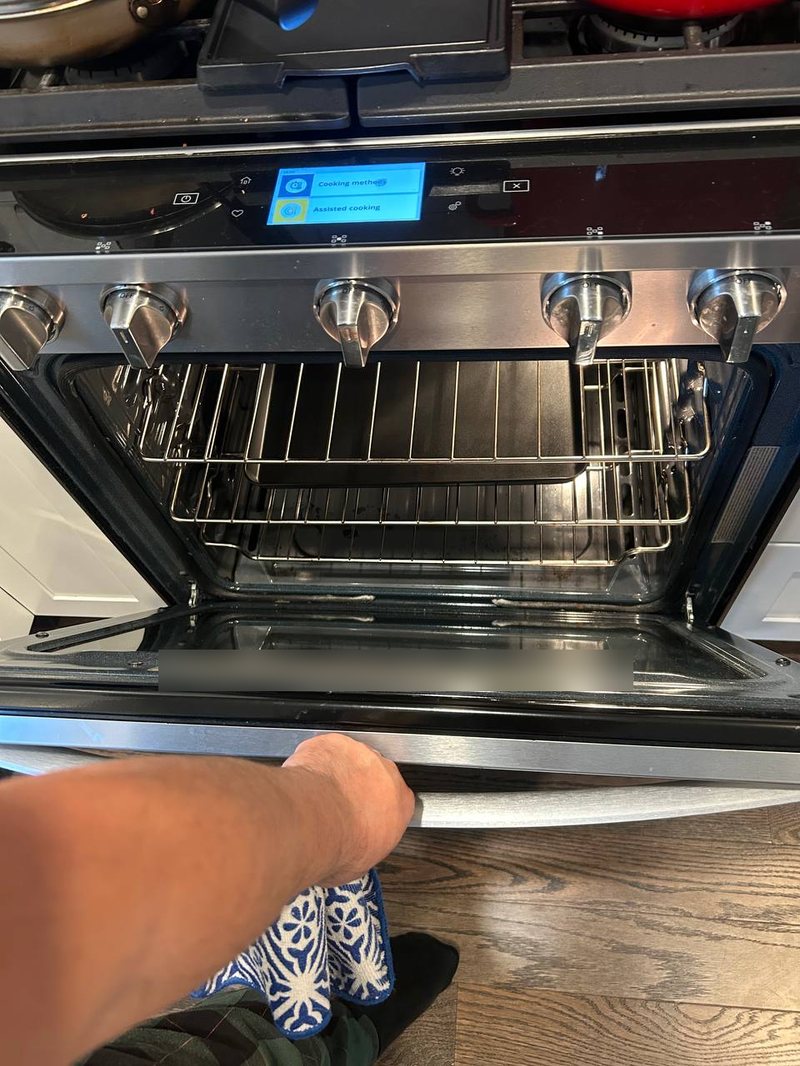
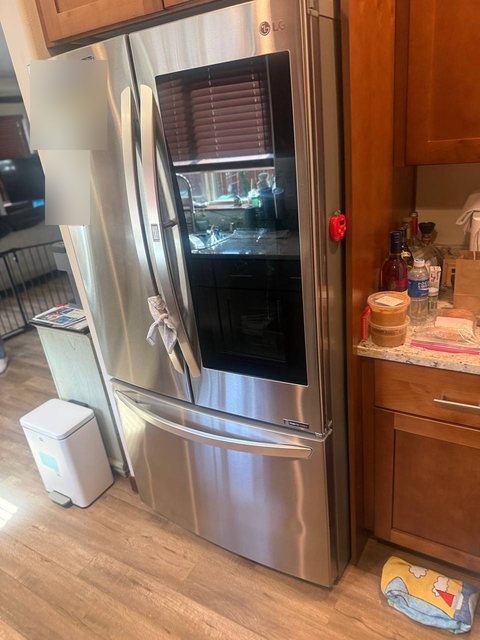
The Viking in your Gig Harbor kitchen glows orange at the oven igniter and never lights, a burner sparks without catching after the wet months, or the built-in refrigerator reads 44.
Weekdays 8–6 · Saturday 9–3 · closed Sunday · truck based on 4425 Harbor Country Dr NW
Refrigerator & Freezer Repair$99 diagnostic · one figure, written
Washer Repair$99 diagnostic · one figure, written
Dryer Repair$99 diagnostic · one figure, written
Dishwasher Repair$99 diagnostic · one figure, written
Oven, Range & Cooktop Repair$99 diagnostic · one figure, written
Ice Maker Repair$99 diagnostic · one figure, written
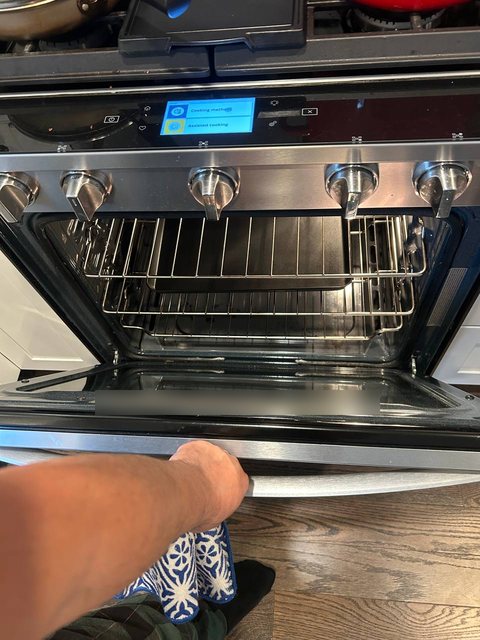
Gig Harbor’s Viking ranges date mostly from the remodel wave of the 2000s. The 1960s and 70s ranches on Point Fosdick and along the Artondale edge had their kitchens opened up and a 36 inch Professional range put in where the coil-top used to be; the Canterwood and Crescent Valley houses got the VDSC dual-fuel with a 42 inch built-in Viking refrigerator beside it; and a few Harborview Dr waterfront kitchens run a 48 inch Professional. Those ranges are now well into middle age, and the electrical parts are due: an igniter that still glows orange yet cannot pull the oven valve open, spark modules that click on, the door hinge that sags, and the refrigerator’s evaporator fan.
Gig Harbor proper cooks on PSE natural gas, so a Viking here rarely has the propane troubles of Fox Island, but the edge of Artondale is a different matter and we check the fuel at every visit. Salt air is the harbor’s contribution: along Harborview Dr and the netsheds it pits the spark electrodes and corrodes the igniter harness terminals until a burner lights on the fourth click. Scale from the city’s moderately hard well water narrows a built-in Viking’s ice-maker valve, and the cubes turn hollow. And the windstorm outages that take Canterwood and Swede Hill dark in winter send a surge through a dual-fuel oven control when PSE returns.
| Appliance | Sign we are called for | Root cause | Our procedure |
|---|---|---|---|
| Professional ranges in Point Fosdick ranches | Oven igniter glows, gas smell, no flame or late flame | Igniter draws under the valve’s threshold as it ages | Read the igniter amperage on a clamp meter, compare to the valve spec, fit a new igniter, time the ignition |
| Burners on Harborview Dr | Fourth-click lighting, one burner dead | Electrode pitted by salt air, harness terminal corroded | Test spark at each electrode, clean or replace the terminal and electrode, confirm first-click lighting |
| VDSC dual-fuel in Canterwood | Oven uneven, F-code after a storm | Sensor drifted, relay on the control failing, surge damage | Pull the code, put the meter on the sensor and the relay outputs, restore clean power, replace only what the readings condemn |
| Built-in Viking refrigerators | Fresh food at 44, freezer fine | Evaporator fan bearing, defrost heater, thermistor | Meter fan, heater and thermistor behind the panel, clear the ice, verify pull-down and hold |
| Built-in ice makers on Gig Harbor water | Hollow cubes, then a thin slab | Fill valve narrowed by the moderately hard supply | Time the fill, fit a fresh valve, check the filter date, run a harvest to confirm |
| Viking dishwashers in Crescent Valley | Food left on plates, will not drain | Spray arm ports scaled, drain pump jammed, wash motor tired | Clear the arms and pump, check wash motor amperage, run a full cycle and inspect the result |
| Display shows | Meaning | How we respond |
|---|---|---|
| F1 | The oven control reports an internal or keypad fault | Power down at the breaker, retest, check the keypad connection, judge the control by the test |
| F2 | Oven temperature went past the control’s upper limit | Read the sensor against a probe, check the heating relay for sticking, replace the faulty part |
| F3 | The oven temperature sensor circuit is reading open to the board | Meter the sensor and its connector behind the oven, replace the sensor or repair the plug |
| F4 | The oven temperature sensor reads as a shorted circuit | Check the sensor resistance and the harness for chafing, replace the shorted sensor |
| F7 | A control panel key reads stuck or shorted to the board | Clean the panel, check the ribbon, replace the touch panel if a key stays closed |
A Viking visit in Gig Harbor is short on driving and long on measuring. The oven igniter goes on the clamp meter first, because a glowing igniter that draws too little current is the fault behind most Viking oven calls on Point Fosdick and it looks fine to the eye. Then the manometer on the manifold, spark at each electrode, the sensor against its chart, and on a dual-fuel model the stored code and relay outputs. A built-in Viking refrigerator gets its thermistors, fans and defrost circuit metered before the compressor is discussed. The truck stocks igniters, electrodes, spark modules, sensors and evaporator fans. Control boards and hinge kits are ordered by model, and the short return from Harbor Country Dr adds nothing for the second visit.
Narrows Appliance Pro is an independent Gig Harbor shop, not a Viking dealer, and we use no title from the maker. A range in a new Harbor Hill house that might still fall inside the maker’s coverage gets flagged to you before the diagnostic, and the choice is yours. St. Anthony Hospital shift workers and shipyard commuters can book the first or last slot of the day, Monday to Saturday; a waterfront owner who is away sees a photo, texts back an approval, and receives the paperwork, invoice and warranty, by email. Whatever figure you approve already includes that $99; should you prefer to stop there, $99 is all you owe. Prices exist only after the diagnostic, and only on paper.
It wants attention. Too little current is passing through the igniter for the gas valve to open fully, so gas gathers in the cavity before the flame catches, and the delay grows as the igniter weakens. Our clamp meter gives the draw; a new igniter goes in and the ignition gets timed. Point Fosdick ranges of that age nearly all need it eventually.
Salt air off the harbor pits the electrode and corrodes the harness terminal, so the spark weakens until the burner catches late. We test spark at each burner, clean or replace the terminal and electrode, and prove first-click lighting. On the waterfront it is the most common Viking call we take.
Yes. Leave our name at the gatehouse off Borgen Blvd or text us the gate code. We pull up the stored code, check the sensor and the relay outputs with the meter, and if the fault followed a PSE outage we restore clean power and retest before condemning the control. The number goes on paper before any part is changed.
Moderately, and over time yes. The city draws from wells, and scale narrows the fill valve until each fill is too small and the cubes come out hollow. We test the fill volume, fit a new valve and look at the filter date while we are in there. A Crescent Valley or Harbor Hill house on the same supply sees the same pattern.
We do, six days a week. Hospital shifts and Bremerton shipyard commutes are common on our schedule, so tell us your hours and we book a window at either end of the day, then text when the truck leaves Harbor Country Dr. Most Viking repairs close in one visit with the parts aboard.
Phone or form, either way a dispatcher sends a two-hour window and a text the moment the truck rolls — from Harbor Country Drive, or off the bridge deck for Tacoma stops.
Clamp meter, thermometer, manometer where propane is involved. The failed component is identified and explained, and one figure goes on paper with the $99 built into it.
The truck carries what salt air, iron water and outages break: fill valves, defrost heaters, igniters, rollers, relays. Anything ordered comes back on our schedule, not your bill.
A complete run of the machine while you watch, the floor and panels put back as found, and the warranty term printed on the invoice.
$99 gets the meter on it, the figure goes on the ticket, the part is usually already on board, and the coverage term is printed on the invoice. Same card on both shores of the Narrows.