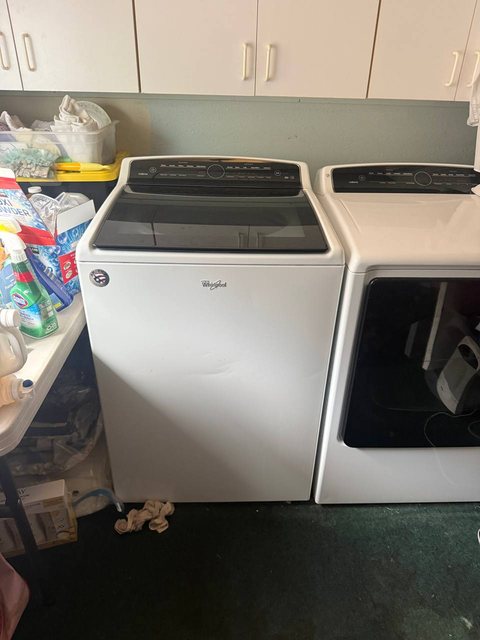
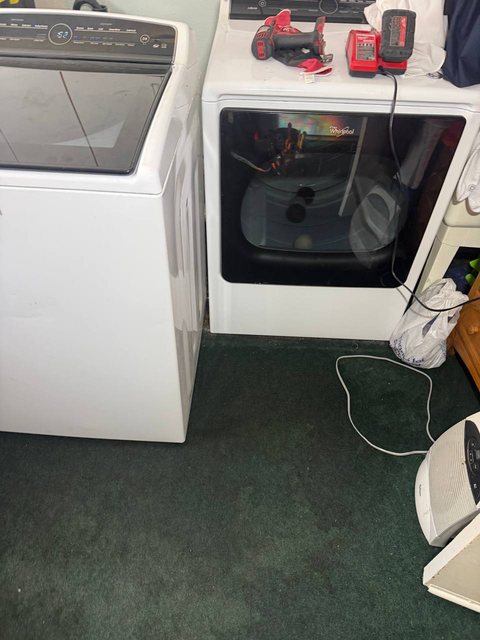
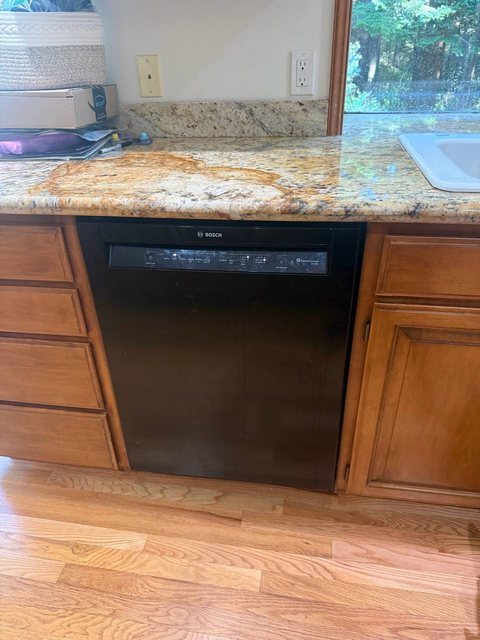
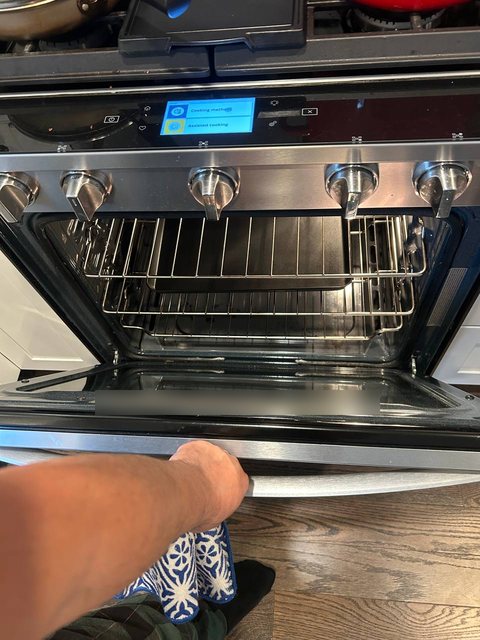
The Wolf in your Gig Harbor kitchen clicks at one burner without lighting, the oven needs the better part of an hour before it shows 350, or a Harbor Hill wall oven flashes F3.
Weekdays 8–6 · Saturday 9–3 · closed Sunday · truck based on 4425 Harbor Country Dr NW
Refrigerator & Freezer Repair$99 diagnostic · one figure, written
Washer Repair$99 diagnostic · one figure, written
Dryer Repair$99 diagnostic · one figure, written
Dishwasher Repair$99 diagnostic · one figure, written
Oven, Range & Cooktop Repair$99 diagnostic · one figure, written
Ice Maker Repair$99 diagnostic · one figure, written
Gig Harbor proper runs on PSE natural gas, so the Wolf ranges here are the 36 and 48 inch gas and dual-fuel models installed as the town grew. They sit in the remodeled waterfront houses on Harborview Dr and North Harborview, in the Canterwood and Harbor Hill builds off Borgen Blvd, in the Crescent Valley houses and in many Point Fosdick ranches whose kitchens were opened up in the 2000s. The E series and M series wall ovens turn up in the townhomes around Uptown and Olympic Dr where a range would not fit. After fifteen years the same parts are due everywhere: spark modules, oven igniters, door hinges and the temperature sensor that starts the oven drifting.
The local wear comes from two directions. On the harbor side, the salt air that drifts up Harborview Dr and across the netsheds pits the spark electrodes, and a burner that lit on the first click starts needing three. In the newer neighborhoods the culprit is the winter power cut: PSE drops Canterwood, Swede Hill and Harbor Hill in the November and December windstorms, and a dual-fuel Wolf or a wall oven that comes back on a surge or on a portable generator can lose its control board or throw an F1. Gig Harbor city water is moderately hard, which matters only to the Wolf steam ovens, whose reservoirs and boilers scale.
| Wolf model | The complaint | Behind it | Our fix |
|---|---|---|---|
| Gas ranges on Harborview Dr | One burner clicks and will not light | Electrode pitted by salt air or wet under the cap, module output weak | Dry and inspect each electrode, test module output, replace the pitted electrode, confirm first-click ignition |
| Dual-fuel ranges in Canterwood | Oven slow, bake uneven, display fine | Sensor drifted high, relay contact worn, convection motor slowing | Meter the sensor against a probe, test relay output, replace the drifting part, bake-test to temperature |
| Wall ovens in Uptown townhomes | Door stays locked once the clean cycle ends | Latch motor stalled or its switch not reporting | Cycle the latch by hand, meter the switch and motor, replace what stalls, retest the lock sequence |
| Rangetops in Point Fosdick remodels | Simmer will not hold, flame lifts | Valve simmer setting drifted, air shutter off, low manifold pressure | Read manifold pressure, set each valve’s low flame, adjust the shutter, confirm a steady blue flame |
| Ovens after a PSE outage | Dead display or F1 on the panel | Control damaged by surge or confused by rough generator power | Restore clean power, retest, check the control and keypad, replace the board only if it fails the test |
| Steam ovens on city water | Steam weak, descale prompt constant | Boiler and reservoir scaled by moderately hard water | Descale the system, check the pump and sensor, set a realistic descale interval for the water |
| Code / indicator | Meaning | Our fix |
|---|---|---|
| F1 | The control found a fault in its own board or the keypad | Cut power at the breaker, retest, inspect the keypad connection, then decide on the board |
| F3 | The oven temperature sensor reads as an open circuit | Test the sensor and its plug where the harness passes the liner, replace what reads open |
| F4 | The oven temperature sensor reads as a short | Check sensor resistance and hunt for chafed wiring before replacing the sensor |
| F5 | The door lock never reached its end position | Move the latch by hand, meter the switches, replace a stalled motor, verify locking |
| F9 | The door lock circuit faulted mid-clean or after a power blip | Confirm the door closes fully, cycle the latch, test the lock switch and control output |
A Wolf call in Gig Harbor starts with the gas supply, because the shop is close enough that we bring the manometer for every range visit. Manifold pressure is read, each burner is lit and watched, spark is tested at every electrode, and the oven igniter goes on the clamp meter to see whether it draws enough to open the valve. On a wall oven the stored F-code decides the order of the tests. Spark modules, electrodes, oven igniters, sensors and latch parts ride on the truck. When a relay board or hinge assembly has to be ordered, the return to Harborview Dr or Canterwood is quick and carries no second trip fee.
Narrows Appliance Pro is an independent Gig Harbor shop, not a Wolf dealer. We hold no title from the maker and we do not sell the ranges; we fix the ones already in your kitchen. Where a range in a new Harbor Hill house may still be under the maker’s own coverage, we say so first and you choose. St. Anthony Hospital shift workers get the first or last slot of the day, and a waterfront owner who spends the week in Seattle gets a photo, answers with a text, and finds the warranty term on the emailed invoice. Approve the work and your $99 has already been counted toward the figure we wrote; stop at the diagnosis and $99 is what you owe. No price gets quoted until the meter has finished with the range, and none gets quoted out loud instead of on paper.
Salt air off the harbor pits the spark electrodes and greens the lead terminals, so the spark weakens until the burner catches late or not at all. It is the most common Wolf fault along Harborview Dr. We test spark at each burner, meter the module and replace the pitted electrode rather than the whole module when that is the fault.
Yes. Hospital rotations show up on our board all the time, which is why the day starts early and ends late Monday to Saturday. Mention your shift when booking, we place the window at whichever end works, and a text goes out as the truck leaves the shop.
We ask you to leave it powered down until we arrive, then restore clean power and retest before anything is condemned. A surge or rough generator power can trip the control without destroying it. If the board did fail, we say so in writing with one number, and you decide whether to go ahead.
We do, and the shop on Harbor Country Dr is a short drive from Uptown. Wall ovens in townhome cabinetry are tight to remove, so we bring the lifting straps and protect the floor. The door latch, the cooling fan and the sensor account for most townhome wall-oven calls, and the truck carries all three.
Inside the city, PSE natural gas is the norm, and most Gig Harbor Wolf ranges run on it. Once you head toward Artondale and Fox Island the same range often burns propane, which changes the orifices and the regulator. We check the fuel and the conversion at every visit, since a mismatch explains a yellow flame at once.
Phone or form, either way a dispatcher sends a two-hour window and a text the moment the truck rolls — from Harbor Country Drive, or off the bridge deck for Tacoma stops.
Clamp meter, thermometer, manometer where propane is involved. The failed component is identified and explained, and one figure goes on paper with the $99 built into it.
The truck carries what salt air, iron water and outages break: fill valves, defrost heaters, igniters, rollers, relays. Anything ordered comes back on our schedule, not your bill.
A complete run of the machine while you watch, the floor and panels put back as found, and the warranty term printed on the invoice.
$99 gets the meter on it, the figure goes on the ticket, the part is usually already on board, and the coverage term is printed on the invoice. Same card on both shores of the Narrows.