Also on the truck · Gig Harbor
The rest of the lineup
$99 to meter it, one figure on the ticket, coverage printed on the invoice — identical for every machine in Gig Harbor.
Jeans still damp after the second cycle, a drum squealing on every turn, warm air that never arrives.
Weekdays 8–6 · Saturday 9–3 · closed Sunday · truck based on 4425 Harbor Country Dr NW
$99 to meter it, one figure on the ticket, coverage printed on the invoice — identical for every machine in Gig Harbor.
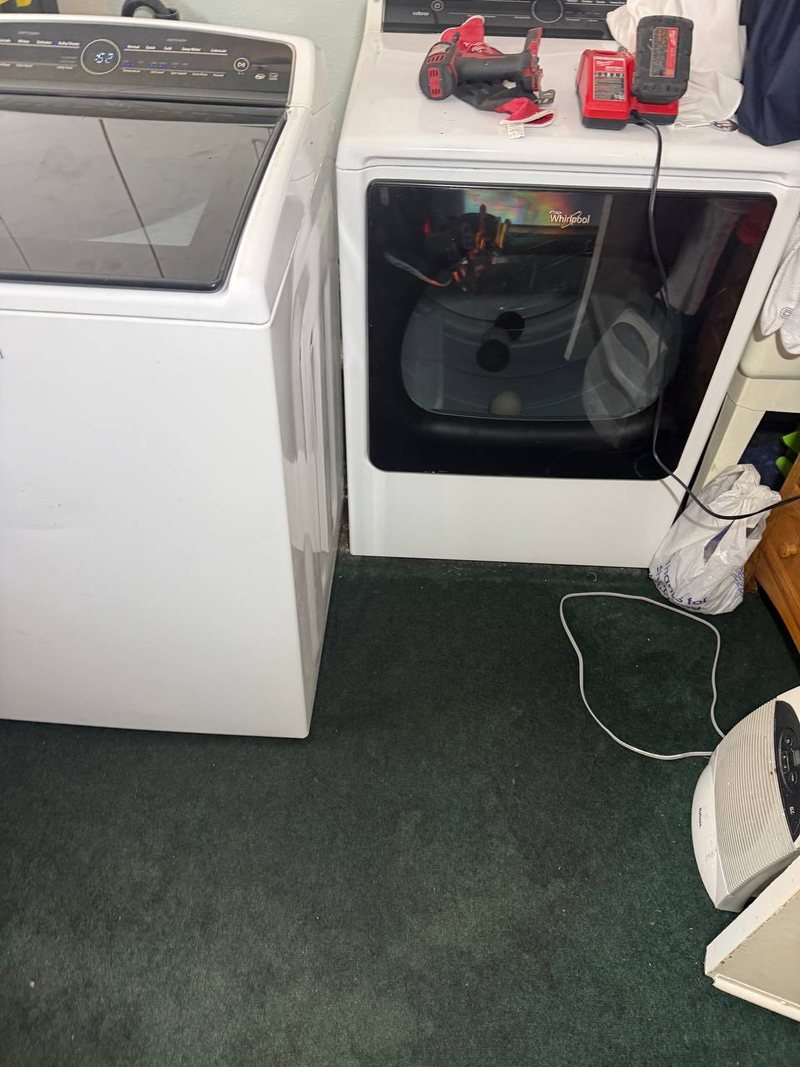
Between October and May the air in Gig Harbor sits near saturation, and any dryer vent running under a crawlspace or along a cold garage wall never dries out between loads. Lint that a desert town would blow straight outdoors sticks here and hardens into paste. That single fact sits behind most dryer calls we take in town, whether the dryer sits in a Point Fosdick ranch, a Harbor Hill garage or a closet stack in an Uptown townhome off Olympic Dr. Our shop sits on Harbor Country Dr where Olympic Dr meets Hwy 16, so a Gig Harbor dryer is usually a next-day window rather than a wait.
Start with a scene from Wollochet Bay: the towels went through once, then again on high, and came out cool and heavy while the drum turned and the timer counted down. Nine times in ten the culprit is an opened thermal fuse, and behind it a vent so choked the fuse had no choice. PSE gas serves the city, so the Point Fosdick and Artondale ranches lean toward gas dryers, while Harbor Hill, Canterwood and the Uptown stacks are mostly electric. Whatever the fuel, we read airflow at the exhaust before we leave, because fixing the heat and ignoring the vent means redoing the job by spring.
Moisture-sensor bars glazed with dryer-sheet residue, a thermistor drifting out of tolerance, or a board with a burned-out relay. We wipe and test the bars, read the thermistor's resistance against the chart and put the board on the quote only when it is the proven fault.
A high-limit or cycling thermostat welded closed, or lint packed tight against the heater housing. A gas burner that is off its setting can over-fire too. We clear the heater box, meter both thermostats and correct the burner, and we do it before the smell turns into something worse.
A parted belt, a motor that has seized, or a door switch reading open with the door shut. Many Whirlpool and Maytag dryers also carry a belt switch that kills the motor when the belt breaks. We look at the belt and the switches first, and only then read the motor windings.
Drum rollers gone flat on one side, a split glide, an idler pulley running dry, or a belt starting to fray. With the front off we rotate the drum slowly by hand until the noise shows itself, then replace the worn pieces together so the fix lasts more than a season.
Airflow, nearly every time. Lint paste in the duct, a flex hose crushed flat behind the dryer, or a roof cap whose flap has stuck shut. We read airflow at the exhaust, clear as much duct as the machine end lets us reach, and say plainly when the duct run itself needs a duct specialist.
On electric machines it is a thermal fuse, an element or a missing leg of 240 volts; on gas machines an igniter, a sensor for the flame, or the coils on the valve. Each gets metered in order, swap whichever reads open, then read airflow so a new fuse does not open the same way.
Everything begins at the wall. On an electric dryer both legs of 240 volts have to be present; on a gas dryer the regulator and gas pressure are checked. With the front panel off, the meter works down the heat circuit a part at a time, thermal fuse, high-limit, cycling thermostat, and finally the element on electric or the igniter and flame sensor on gas, until something reads open. Once the drum is out, the rollers, glides, idler and belt get checked by hand. Airflow is read at the exhaust, and the duct is cleared to the limit of what the machine side allows. We name the part that gave up in plain words and put a single price on paper. Whirlpool, Maytag, LG, GE and Samsung dryer parts are largely aboard, which is why the job is usually done before we leave.
Maytag, Whirlpool, Kenmore, Samsung, LG and GE cover most Gig Harbor dryers, with Speed Queen in the older ranches and Miele or Bosch compacts in the Uptown closet stacks. Nurses and techs at St. Anthony Hospital get first-thing and end-of-day windows; a harbor house owned from Seattle gets a photo, approves by text, and finds the invoice and warranty in its inbox. The money works the same in every laundry room: approve the written repair figure and the $99 diagnosis is already counted inside it, one number rather than two; turn the repair down and the visit costs $99, nothing beyond it. Nothing is priced before the diagnosis, and everything that is priced is written.
Repair, nearly every time. Thermostats, fuses, igniters and elements are small parts relative to the machine, and the motor, drum and cabinet usually have a long life ahead. After the diagnosis we write one figure and give you a plain opinion; a cold dryer that is not worth fixing is a rare thing.
We clear whatever run is reachable from the dryer side and read airflow at the exhaust every visit, since no dryer diagnosis is complete without the vent. A long duct through a Harbor Hill townhome or a roof cap needing a ladder is work for a duct company, and we say so rather than doing half of it.
Neither is harder. In the 1970s ranches on Point Fosdick and along Artondale Dr the gas dryers lose their igniter, flame sensor or valve coil; up in Harbor Hill and the Uptown stacks the electric ones lose a fuse or an element. Both get the same meter-first sequence and both have most parts aboard the truck.
Within the week, often the very next working day, any day but Sunday. The shop on Harbor Country Dr makes Gig Harbor our shortest drive. A warm refrigerator gets the first same-day slot; a cold dryer is next. If you can read the model tag and know the fuel, tell us, so the probable parts are already aboard.
Usually the vent behind the stack is the trouble, so the pair has to come forward. We walk it out on runners so the floor is not scarred, service the dryer, clear the duct and reconnect it properly, then slide the stack home. It is routine work in the closets around Olympic Dr and Uptown.
Phone or form, either way a dispatcher sends a two-hour window and a text the moment the truck rolls — from Harbor Country Drive, or off the bridge deck for Tacoma stops.
Clamp meter, thermometer, manometer where propane is involved. The failed component is identified and explained, and one figure goes on paper with the $99 built into it.
The truck carries what salt air, iron water and outages break: fill valves, defrost heaters, igniters, rollers, relays. Anything ordered comes back on our schedule, not your bill.
A complete run of the machine while you watch, the floor and panels put back as found, and the warranty term printed on the invoice.
$99 gets the meter on it, the figure goes on the ticket, the part is usually already on board, and the coverage term is printed on the invoice. Same card on both shores of the Narrows.