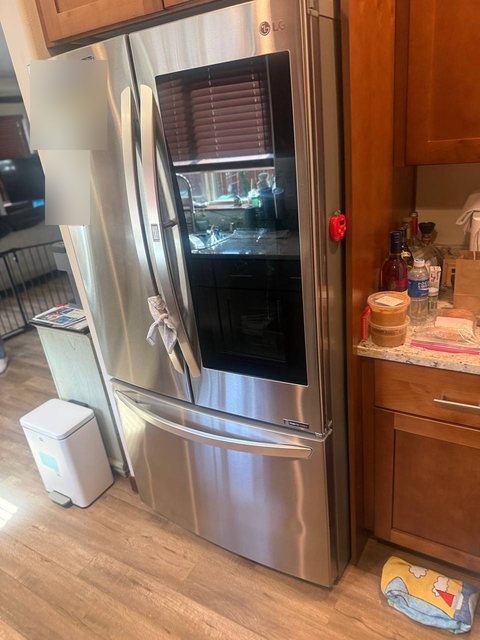
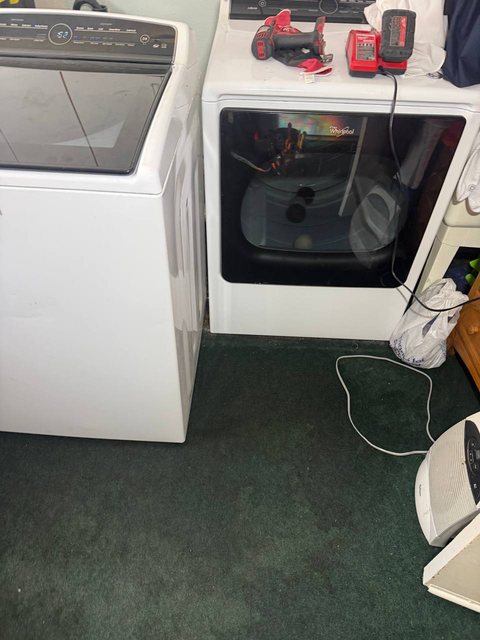
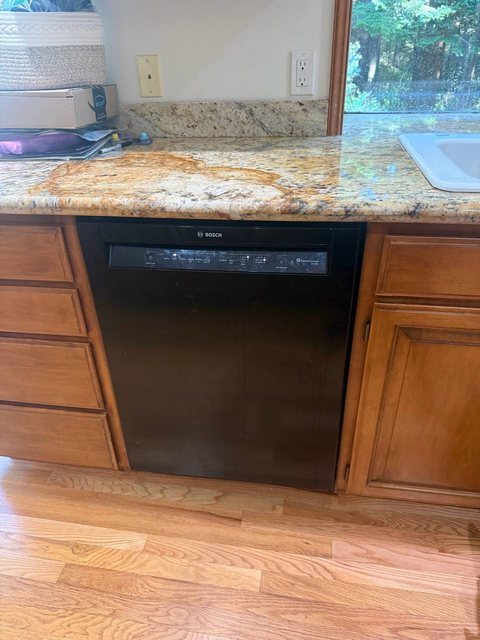
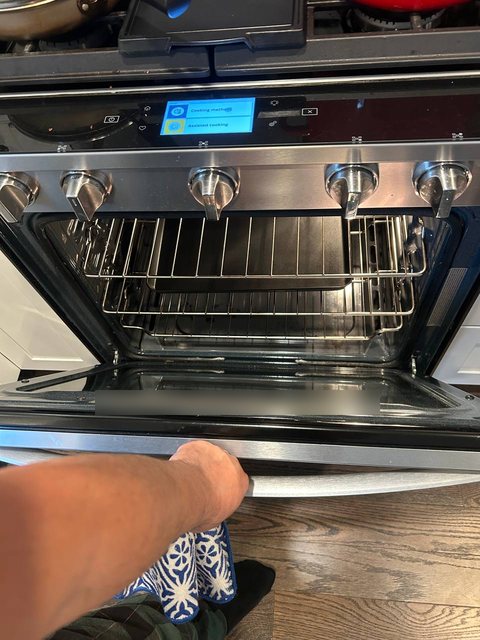
Also on the truck · Gig Harbor & both sides of the Narrows
The rest of the lineup
$99 to meter it, one figure on the ticket, coverage printed on the invoice — identical for every machine in Gig Harbor & both sides of the Narrows.
A tub of grey water going nowhere, a spin cycle that never begins, a lid that stays locked.
Weekdays 8–6 · Saturday 9–3 · closed Sunday · truck based on 4425 Harbor Country Dr NW
$99 to meter it, one figure on the ticket, coverage printed on the invoice — identical for every machine in Gig Harbor & both sides of the Narrows.
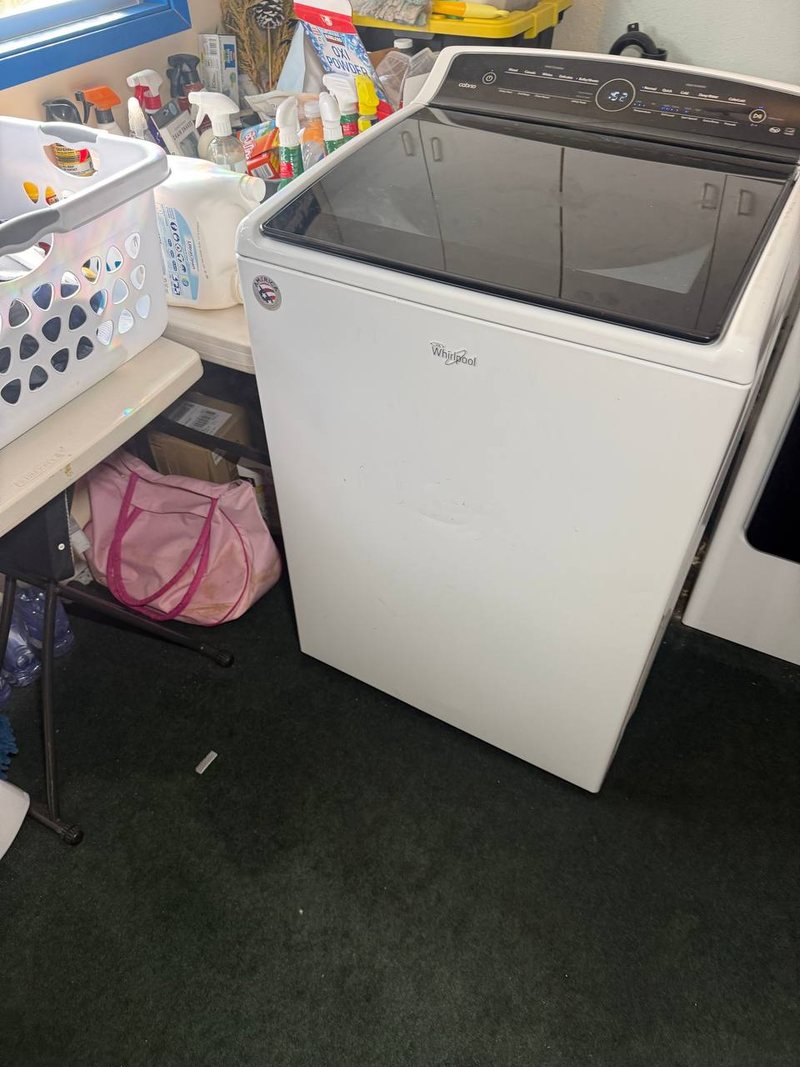
Where the washer sits tells us half the story before we open the lid. In the townhomes around Uptown Gig Harbor and Olympic Dr it is a stacked pair wedged into a hall closet over a drain pan, with no room to swing a wrench. In the Point Fosdick and Artondale ranches it is a Whirlpool or Maytag top-loader in a garage that stays damp all winter. Across the bridge in Proctor and the Stadium District, it is a front-loader carried down narrow basement stairs into a 1920s house whose drain was sized for a wringer machine. We work all of them from the Gig Harbor shop, on the Tacoma side with nothing for the toll on your bill.
Water quality splits the area in two. Gig Harbor city water is moderately hard, and the wells that supply Fox Island, Purdy, Olalla and the Key Peninsula carry iron and manganese that stain drums orange and black and gum up inlet valve screens. Tacoma Water is soft, so the North End and West End washers rarely scale; there the failures are age, worn bearings and a drain pump that finally swallowed a sock. A typical call from Harbor Hill: the machine fills and agitates, and then everything halts, lid locked, tub still full. Either the drain pump or a clogged trap, and a few meter readings settle which.
Either the pump motor has quit or its impeller is jammed with a coin, a hairpin or the drawstring of a hoodie. Sometimes the standpipe is the block. The pump housing comes apart, the blockage comes out, the winding gets metered, and a dead pump is replaced from truck stock.
Top-loaders do this with a failed lid lock, a shifter or a worn clutch; front-loaders more often with a door latch, a bad tachometer signal or an unbalanced load the board refused to spin. We test each in order and quote the one part that actually failed.
The lock solenoid has stuck, or the control has stopped a cycle mid-way because of a drain fault and will not release. We open the machine safely, read the stored code, and repair the lock or the underlying fault so the door does not trap the next load.
Water on the floor points to a split fill hose, a front-loader’s torn door boot, a cracked outer tub gasket or a pump seal. Panels off, we let it fill and spin and watch for the actual drip instead of guessing from the puddle.
Worn tub bearings, a broken suspension rod or a failed shock absorber let the drum swing into the cabinet. Iron-heavy well water shortens bearing life. We check bearing play by hand, inspect the rods and shocks, and tell you frankly whether a bearing job on your model makes sense.
Whirlpool, LG and Samsung codes point at a drain timeout, a lock fault, a fill problem or a motor sensor. The code gets read and then checked against the meter, since a code describes a symptom and does not always name the part. One written number follows the reading.
We start a washer call at the drain. Machine pulled out, lower panel off, we open the pump housing and put the meter on the winding while checking the trap for whatever stopped the impeller. If the pump is sound, we move to the lid lock or door latch, the drive motor and the control board, reading voltage at each connector rather than swapping parts on a hunch. A front-loader gets its door boot inspected for tears and iron slime, a top-loader gets its suspension rods and clutch checked. The component that failed is then called by its plain name, photographed if you are not home, and a single number is written down.
Most of our washer work is Whirlpool, Maytag, LG, Samsung, GE and Speed Queen, with Miele and Bosch compacts in the newer Gig Harbor North kitchens and the Point Ruston condos. Rental owners with units in Hilltop or Port Orchard, and second-home owners on Fox Island, give their yes by text and find invoice and warranty in their inbox; a gate code or lockbox is all we need. Whichever side of the bridge you are on, the diagnosis costs $99, and the moment you approve the written repair figure that $99 is counted inside it. The meter does its work before any price exists, and every price after the diagnostic is on paper.
Yes, including the Uptown and Olympic Dr units in hall closets with almost no clearance. We bring the tools to slide a stacked pair out without scarring the floor, service the washer below, and put it back with the dryer vent reconnected properly. Compact 24-inch Bosch and Miele pairs are routine for us.
Both, and we are candid about which is which. Iron in Fox Island, Purdy and Key Peninsula wells stains the drum and clogs inlet screens; we clean the screens and replace a scaled inlet valve. The staining itself is a water-treatment matter for your softener or iron filter, and telling you so beats selling a part that cannot cure it.
No. The toll is eastbound only and it is ours, not yours. A Proctor or Stadium District washer pays the same $99 to diagnose and sees the same written price a Gig Harbor washer would. We are across the Narrows most days anyway, so the schedule is the same as well.
Usually the repair happens where the machine sits, so the stairs matter less than you would think. Bearings, pumps, locks and boards are all replaced in place. If a machine must come out for a tub job, you hear that first, along with the written number, so replacement can be weighed against it.
The diagnosis takes most of the first hour. If the failed pump, lock, belt or hose is on the truck, the repair and a full test cycle happen while we are there. Should a part need ordering, we come back, usually inside the week, and the second visit adds nothing to the bill.
Phone or form, either way a dispatcher sends a two-hour window and a text the moment the truck rolls — from Harbor Country Drive, or off the bridge deck for Tacoma stops.
Clamp meter, thermometer, manometer where propane is involved. The failed component is identified and explained, and one figure goes on paper with the $99 built into it.
The truck carries what salt air, iron water and outages break: fill valves, defrost heaters, igniters, rollers, relays. Anything ordered comes back on our schedule, not your bill.
A complete run of the machine while you watch, the floor and panels put back as found, and the warranty term printed on the invoice.
$99 gets the meter on it, the figure goes on the ticket, the part is usually already on board, and the coverage term is printed on the invoice. Same card on both shores of the Narrows.