Also on the truck · North End Tacoma
The rest of the lineup
$99 to meter it, one figure on the ticket, coverage printed on the invoice — identical for every machine in North End Tacoma.
A dryer in a 1920s North End Tacoma house breathes through a vent somebody retrofitted decades after the framing went up, and that duct is where no heat and endless cycles usually begin.
Weekdays 8–6 · Saturday 9–3 · closed Sunday · truck based on 4425 Harbor Country Dr NW
$99 to meter it, one figure on the ticket, coverage printed on the invoice — identical for every machine in North End Tacoma.
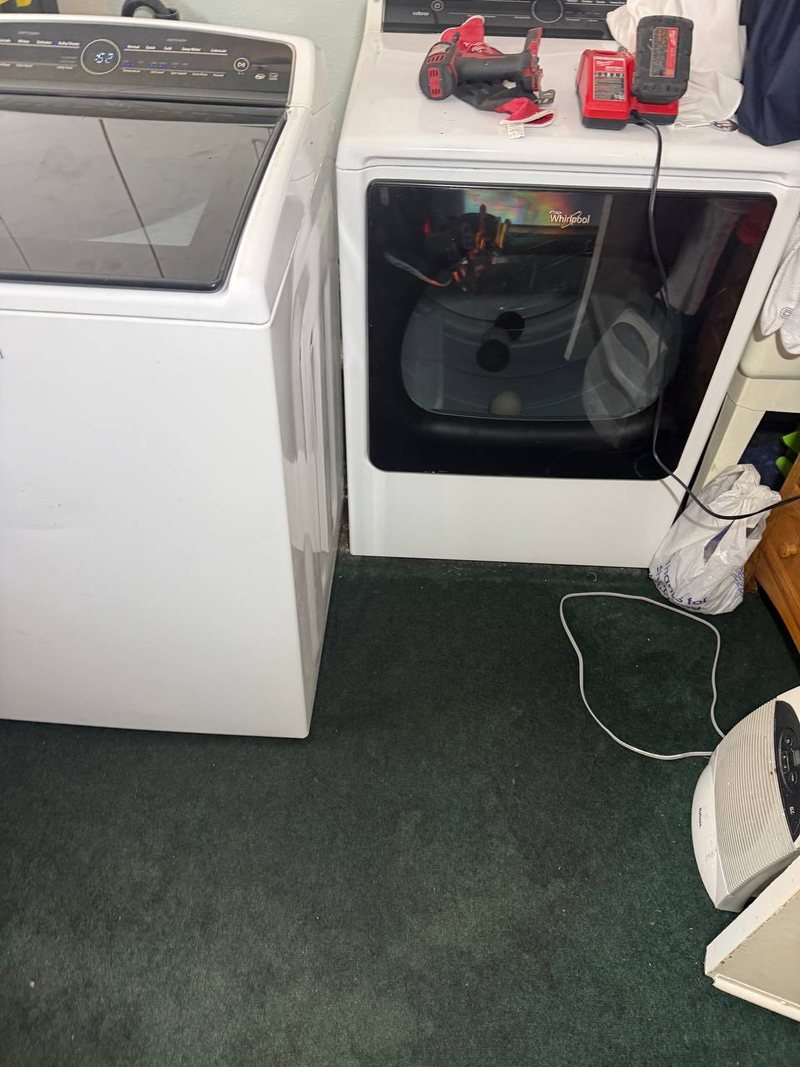
Nobody drew a dryer vent on the plans of a 1912 Craftsman on N 30th or a 1928 Tudor in the Stadium District. The vent was added later, often through a basement window well or forty feet of duct to the nearest exterior wall, with more elbows than the dryer was designed for. In a wet Tacoma winter that duct never dries, the lint turns to paste, and the dryer that was fine in August takes two cycles by December. We bring a vent brush and an airflow meter on every dryer call from Proctor to Old Town, coming over the Narrows from Gig Harbor with the toll on our books and not on yours.
The houses hold other patterns. Gas dryers on the old PSE lines in Proctor lose their igniters and coils at ten or twelve years like clockwork. Electric dryers on 1960s-era 240 circuits in retrofitted basements lose a leg at the receptacle and tumble cold. Rollers and idler pulleys wear out and start the thump that echoes up the stairwell. A thermal fuse opens because a vent is choked, gets replaced, and opens again. The soft Tacoma water is no factor here; the wet, the age and the duct are. We replace what broke and correct whatever made it break.
On electric, a thermal fuse, an element or one dead leg at the outlet. On gas, an igniter, gas coils or a flame sensor. We meter each in order rather than swapping parts, then check the vent that opened the fuse in the first place, because a new fuse on a choked duct opens again quickly.
Airflow is choked somewhere: a long basement duct lined with wet lint, a crushed transition hose, a hood flapper stuck shut. An airflow reading at the dryer and another at the hood locate the restriction; we clear what is reachable from both ends and say plainly when the run through the joists calls for more than the dryer side allows.
Weak gas coils that open the valve and then let it close, a tired flame sensor, or a high-limit tripping on a blocked vent. We watch the burner through an entire cycle before deciding, because coils that fail warm look fine for the first five minutes and a sensor that reads correctly cold can still be the fault.
Worn drum rollers, a flat idler pulley or a broken glide. The truck stocks all three, so this job normally closes on the first visit; while the drum is out the belt, blower wheel and felt seal get inspected too, since they age on the same schedule.
Lint resting against the element or inside the burner tube, or a belt rubbing a seized roller. With the cabinet open we clean the element area and the blower housing, check the drive and the rollers, then run a timed test cycle with the meter reading exhaust temperature before calling it done.
A failing motor, a door switch or a belt switch. Each reads differently on the meter and none justifies a new dryer before it is tested; a motor that stalls when hot gets replaced, so does a door switch reading open with the door shut, and the control board comes under suspicion last rather than first.
The technician starts at the exhaust hood outside, because a reading there often tells the whole story before the dryer is touched. Next the outlet: when half of the 240 volts has gone missing at the receptacle, the dryer tumbles without ever heating, and the fault belongs to the wiring rather than the machine. Only then does the cabinet open, and the meter works through thermal fuse, high-limit thermostat, element or igniter and coils, flame sensor and motor in that order. Drum rollers and the idler get turned by hand while everything is exposed. You hear the name of the broken part in plain English and see a single figure written down. Dryer parts for the common brands are already on the truck.
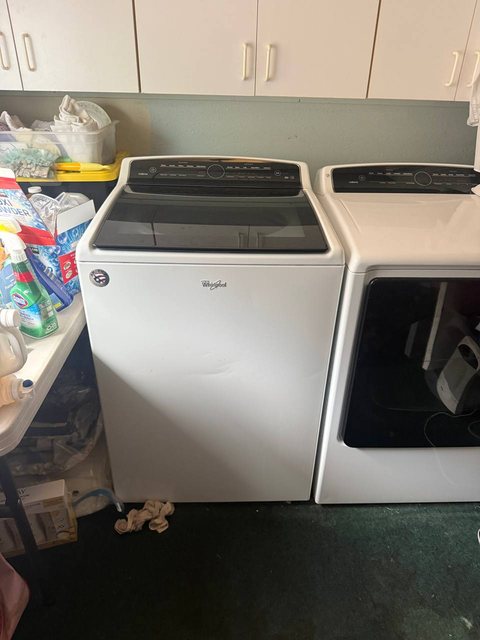
We repair Whirlpool, Maytag, GE, LG, Samsung, Kenmore, Electrolux, Amana and Speed Queen dryers across the North End, and the Miele and Bosch condenser and heat-pump dryers in remodeled closets where no vent was possible. For rentals near the University of Puget Sound and the Stadium District, the owner replies to a text with the go-ahead and the invoice and warranty reach them by email. Nothing for the bridge crossing goes on the bill. Approve the dryer repair and the $99 diagnostic has already been counted toward that figure; decline and your total stops at $99. Every dryer repair price in North End Tacoma is written after the diagnostic, never quoted over the phone.
The duct. A long retrofitted run through a damp basement never dries out, lint sticks to the wall and airflow drops until the dryer is barely breathing. We measure airflow, clean the reachable section, and let you know whether the full run needs a dedicated duct cleaning, which a forty-foot run with four elbows sometimes does.
No. The toll is eastbound only and it is part of running the truck, not part of your bill. The invoice lists the diagnostic and the repair, nothing more, and a dryer in Proctor is priced from the same card as a dryer on Harborview Dr.
No. The fuse is opening because the dryer is overheating, and that is almost always a restricted vent or a stuck cycling thermostat. A new fuse goes in along with a repair of whatever tripped it, so it stays fixed; a dryer that has eaten three fuses in a year has a vent problem, not a fuse problem.
Yes, and turn it off until we get there. A hot smell points to lint that has reached the element or burner housing, or to a belt dragging across a seized roller. It is a modest repair, but not one to keep running in a hundred-year-old house with a basement full of stored boxes and a wooden stair.
Yes. Stacked pairs in retrofitted closets have to come out or come apart before the drum and blower are reachable, so we ask about the setup on the phone and arrive prepared. Tell us the closet depth and whether the doors come off, and the technician arrives ready rather than surprised.
Phone or form, either way a dispatcher sends a two-hour window and a text the moment the truck rolls — from Harbor Country Drive, or off the bridge deck for Tacoma stops.
Clamp meter, thermometer, manometer where propane is involved. The failed component is identified and explained, and one figure goes on paper with the $99 built into it.
The truck carries what salt air, iron water and outages break: fill valves, defrost heaters, igniters, rollers, relays. Anything ordered comes back on our schedule, not your bill.
A complete run of the machine while you watch, the floor and panels put back as found, and the warranty term printed on the invoice.
$99 gets the meter on it, the figure goes on the ticket, the part is usually already on board, and the coverage term is printed on the invoice. Same card on both shores of the Narrows.