Also on the truck · Artondale & Purdy
The rest of the lineup
$99 to meter it, one figure on the ticket, coverage printed on the invoice — identical for every machine in Artondale & Purdy.
Towels still damp after a second cycle, or a drum turning while the air stays cold: in Artondale and Purdy that is usually a pasted vent, a thermal fuse or a propane burner never set up right.
Weekdays 8–6 · Saturday 9–3 · closed Sunday · truck based on 4425 Harbor Country Dr NW
$99 to meter it, one figure on the ticket, coverage printed on the invoice — identical for every machine in Artondale & Purdy.
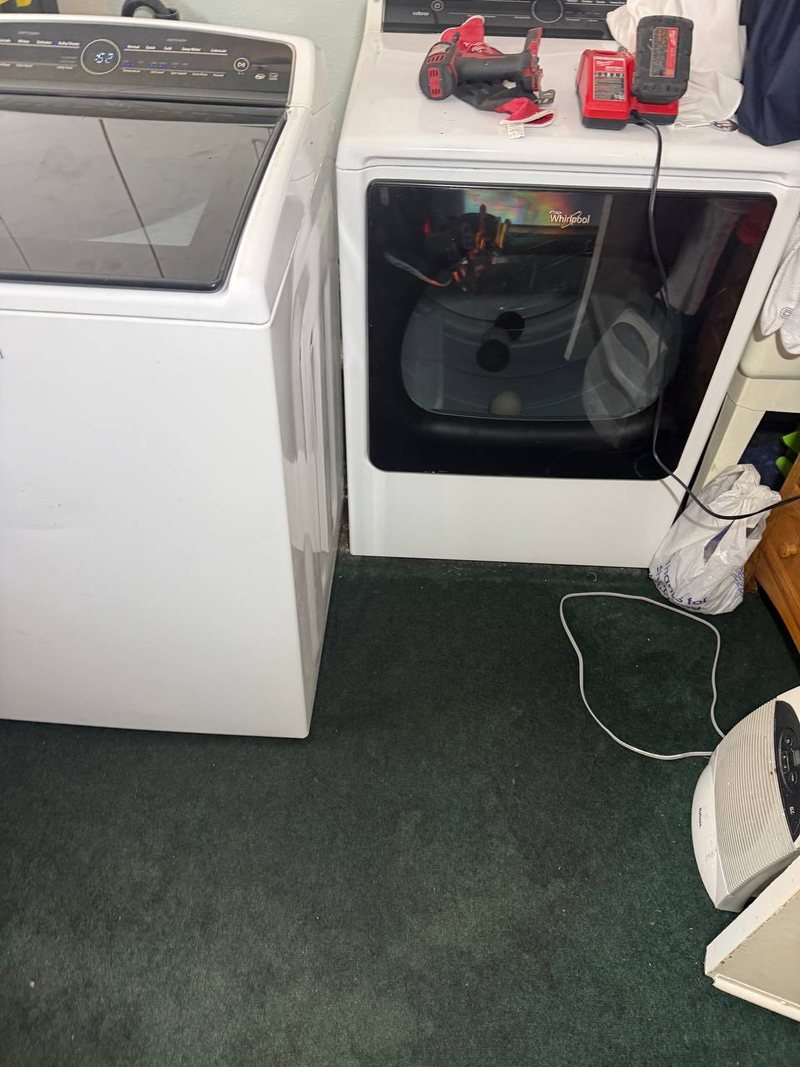
Take Hwy 16 north from the shop, come off at Purdy or Wollochet, and the roads get long and the houses get farther apart. The 1970s to 90s acreage places along Artondale Dr, Ray Nash and the Rosedale side have laundry rooms wherever the builder had space left, and the vent from that room may travel thirty feet of crawlspace before it finds air. Wet months here run October into May, and in that stretch a duct never has a dry day. Lint mats against the wall, the hood damper gums up, and a dryer that finished a load in under an hour in July needs two runs by Halloween. An anemometer at the hood is the first instrument out of the truck on any dryer call near Peninsula High School or Burley Lagoon.
Then there is the fuel. Natural gas ends before the acreage begins, so a dryer that came out of a Tacoma house arrives set for a fuel it will not be burning. On propane it lights soft and yellow, the flame sensor loses confidence and the burner drops out partway through the load, leaving warm-but-damp clothes and an owner blaming the thermostat. Electric dryers out here on wells and septic have their own loop: a plugged vent overheats the drum, the thermal fuse opens, a new fuse goes in, and the same thing happens next month. Peninsula Light outages add a surge or two to the control boards each winter. We repair the part that failed and the condition that failed it.
Airflow, nearly always. A crawlspace duct lined with wet lint, a foil transition hose crushed behind the machine, a hood damper stuck shut by paste. We read airflow at the dryer and again at the hood, then clear what can be reached from either end, and say so plainly when the run through the crawlspace needs a full-length cleaning beyond what a dryer visit covers.
An unconverted dryer running a natural-gas orifice, a flame sensor at the end of its life, or a blocked exhaust tripping the high-limit. We watch flame color, confirm the conversion, and read exhaust temperature before any part comes off the shelf, because a fresh sensor on a dryer burning the wrong orifice will be back on the same complaint within a month.
A door switch reading open, a belt switch that believes the belt has broken, or a motor stalling as it warms. The meter separates them quickly. A stalled motor gets replaced, so does a bad switch, and the control board is checked last rather than blamed first; none of these is grounds for a new dryer without testing.
Lint resting on the heating element or packed inside the burner tube, or else a belt dragging across a roller that no longer turns. Stop using it and call. The lint comes out of the element, the blower housing and the burner, belt and rollers get checked, and we time a heat cycle with a probe in the exhaust before signing off.
Electric: an opened thermal fuse, a heating coil that has snapped, or one leg of the 240 missing at the receptacle. Propane or gas: igniter, gas coils or flame sensor. Each is metered in turn instead of swapped on suspicion, and the vent that overheated the fuse is corrected so the new one lasts.
Flat spots on the drum rollers, a dry bearing in the idler pulley, or glides worn through to bare metal. All of them are carried on the truck, so the work is normally finished before we leave. While the drum is out the belt, blower wheel and rear seal get a look too, because they age on the same clock.
The first reading is taken outdoors at the hood, because weak airflow there explains a slow dryer before the cabinet is ever opened. Next is the receptacle: an electric dryer tumbling cold on a 240-volt circuit that has lost one leg has a breaker problem, and we say so instead of selling a part. Only then does the back panel come off and the meter work through the fuse and high-limit, then the element on electric or the igniter, coils and flame sensor on propane, and finally the motor. On propane the burner is watched through a full cycle for flame color and dropout. Rollers and idler are turned by hand while the drum is accessible. Whatever failed is named in plain language and priced in one written figure, and for the common brands the part is already aboard.
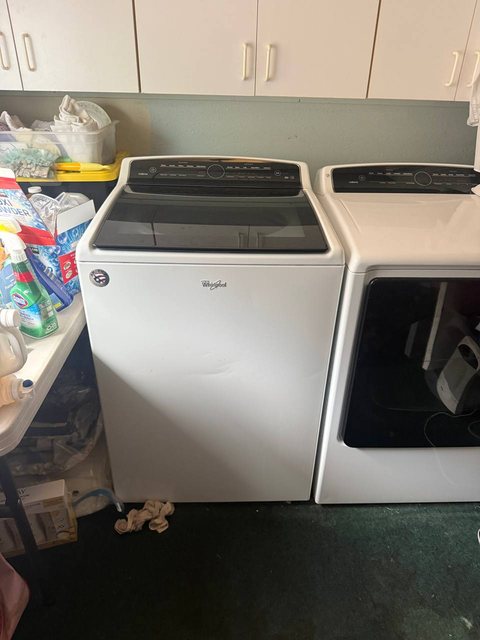
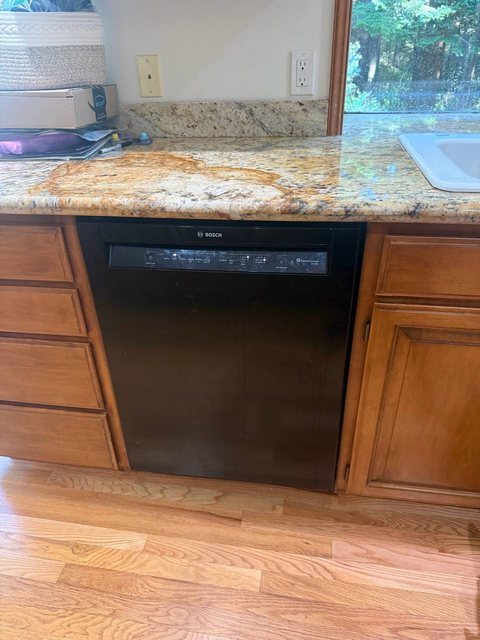
Speed Queen, Amana, Electrolux, Kenmore, Samsung, LG, GE, Maytag and Whirlpool dryers in all three fuels are the daily work from Wollochet to the Spit, with a Bosch or Miele ventless unit now and then in a closet where no duct could run. When the dryer belongs to a rental or a second home along Henderson Bay, the owner gets a photo, texts back approval of the figure, and receives the paperwork, invoice and warranty, by email without anyone driving out. Give the go-ahead and that figure has already swallowed the $99 diagnostic; hold off and the $99 is all that gets billed. Dryer repair prices in Artondale and Purdy are set after the diagnosis and handed over in writing, never over the phone.
The vent. Between October and May a crawlspace duct never dries, wet lint sticks to the walls and the damper at the hood gums shut, so the dryer moves less air each week. Airflow gets measured on each visit and the reachable run cleared; when thirty feet of duct with several elbows needs a dedicated cleaning, we tell you rather than pretend a dryer part will fix it.
Not until it is converted. A natural-gas orifice on propane gives a lazy yellow flame that trips the sensor and drops the burner mid-cycle. The conversion is the correct orifice plus a regulator set for propane, and we verify both by watching the flame and metering the burner through a whole load, then finish whatever the installer left undone.
No. The dryer is overheating and the fuse is protecting it, exactly as designed. The cause is nearly always a choked vent or a cycling thermostat stuck closed. We replace the fuse and correct what tripped it, so you stop buying fuses; repeated fuses point at airflow, not at the fuse.
Yes. We run Monday through Saturday, and the Purdy and Artondale roads are a short hop up Hwy 16 from the shop. Saturday slots go early, so ask for one when you call; a dryer with no heat at all is scheduled within the week whichever day suits you.
Please do not. That smell is lint cooking on the heating element or inside the burner tube, or it is coming off a belt that rubs a seized roller, and at the end of a long driveway a long way from a hydrant it is not worth the gamble. Shut it off, leave the door open, and we will have the lint out and the cause fixed on the visit.
Phone or form, either way a dispatcher sends a two-hour window and a text the moment the truck rolls — from Harbor Country Drive, or off the bridge deck for Tacoma stops.
Clamp meter, thermometer, manometer where propane is involved. The failed component is identified and explained, and one figure goes on paper with the $99 built into it.
The truck carries what salt air, iron water and outages break: fill valves, defrost heaters, igniters, rollers, relays. Anything ordered comes back on our schedule, not your bill.
A complete run of the machine while you watch, the floor and panels put back as found, and the warranty term printed on the invoice.
$99 gets the meter on it, the figure goes on the ticket, the part is usually already on board, and the coverage term is printed on the invoice. Same card on both shores of the Narrows.