Also on the truck · Artondale & Purdy
The rest of the lineup
$99 to meter it, one figure on the ticket, coverage printed on the invoice — identical for every machine in Artondale & Purdy.
Pans blackening on the bottom, a simmer that will not stay low, an oven forty degrees hot: on propane in Artondale and Purdy that points to a conversion never finished.
Weekdays 8–6 · Saturday 9–3 · closed Sunday · truck based on 4425 Harbor Country Dr NW
$99 to meter it, one figure on the ticket, coverage printed on the invoice — identical for every machine in Artondale & Purdy.
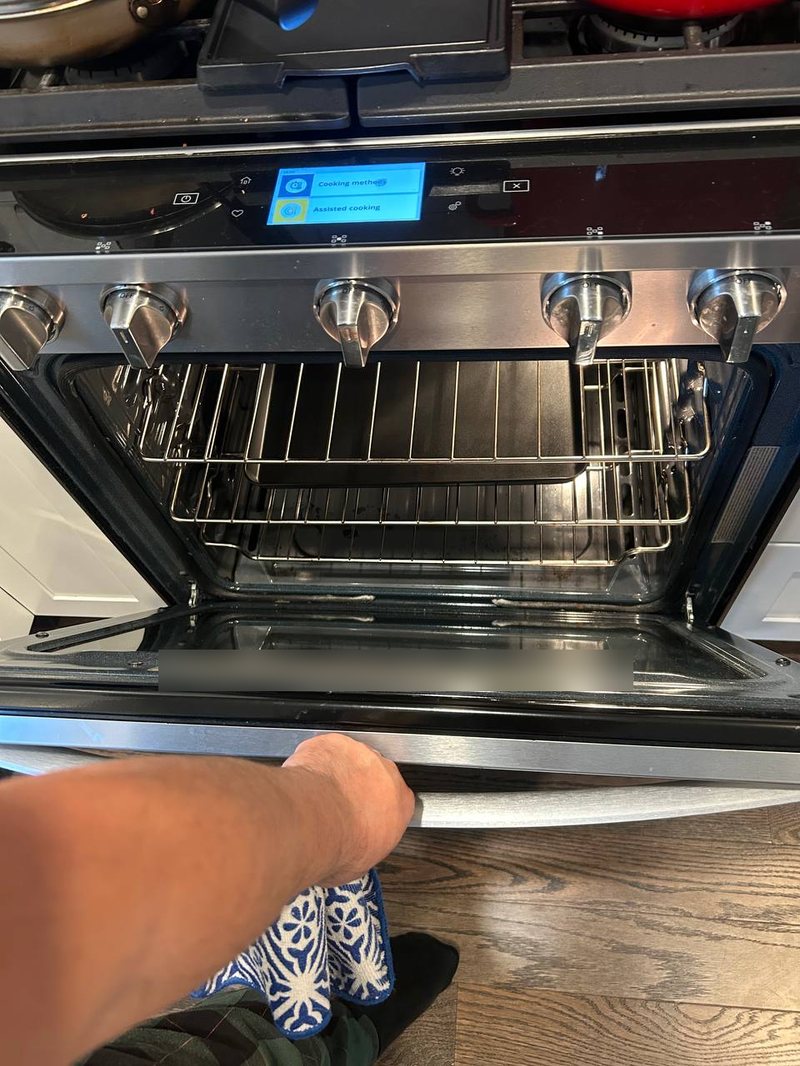
Follow Hwy 16 north past the Gig Harbor exits and the gas mains thin out; by Rosedale, Ray Nash and the acreage around Peninsula High School nearly every kitchen cooks from a tank. The ranges themselves came from showrooms set up for natural gas. A conversion kit was in the drawer, and sometimes still is. What the owner gets is a burner that lights fine and then misbehaves: soot on the pan bottoms, a roar on the lowest setting, an oven that overshoots and a whiff of unburned fuel each time a burner catches. We meet this on Artondale Dr, along Burley Lagoon and out toward the Spit, and the fix is a manometer, the right orifices and a regulator actually switched.
Electric ranges here have a different enemy: Peninsula Light. A winter blow off Henderson Bay drops the lines, the power stumbles back on, and the next morning a glass-top in a Rosedale-area house shows an F-code and one dead zone, or a wall oven in a 1980s acreage house has lost its display altogether. Generators running the house in the meantime feed dirty power that induction boards dislike. Then there is ordinary age: a bake element that has burned through at the usual bend, a hot-surface igniter that glows a tired orange and never pulls the current the valve needs. Whatever the case, the meter or manometer leads, we call the failed part by its plain name, and one figure is on paper before anything is touched.
Natural-gas orifices passing propane at roughly twice the fuel the burner wants, or a regulator still on its natural-gas setting. We read manifold pressure with a manometer, swap the burner and oven orifices for the propane set, flip or replace the regulator, and trim the air shutters until each flame is blue and stays lit on low.
Either the temperature sensor has drifted from its rated resistance or the control board is misreading a good sensor. A thermometer in the cavity through a full cycle, compared against the sensor’s ohms at that temperature, tells which. On propane, oversized orifices also push the oven hot, so the flame is checked too.
A radiant element open under the glass, a burnt infinite switch, or a terminal block connection that has cooked itself loose. Element and switch are metered, then the block is inspected for heat damage, since a scorched block left in place cooks the replacement element the same way. A surge after an outage can also take out the relay board.
An aging hot-surface igniter glows but no longer pulls enough amperage to release the safety valve, and the gas never arrives. We clamp an ammeter on it and compare the draw to the maker’s spec. The valve itself is seldom at fault and is never changed on a hunch; igniters for the common ranges are on the truck.
A spark electrode cracked or crusted from boil-overs, a spark module losing one output, or a burner cap knocked off center when the grate came off for cleaning. Each burner’s spark is checked and the cap reseated before any module is condemned; a wet electrode after a spill dries and works, and no part is sold for that.
The control board or a relay board took a hit when the power returned, or a generator’s rough output confused an induction generator. We check line voltage at the receptacle, then the board’s outputs, then the elements, before the range is written off; usually a single board explains everything and the remainder of the range is sound.
On propane the diagnosis begins by lighting everything and watching. Flame color, flame height and whether the low setting holds tell the technician most of what a conversion question needs; a manometer on the manifold and a look at the orifice stamping settle the rest. Then a clamp meter reads the igniter’s draw, the spark module is exercised burner by burner, and the cavity temperature is logged with a thermometer and compared to the sensor’s resistance. Electric and induction ranges get the meter on the elements, the infinite switches, the terminal block and finally the board. No number is written until the fault is pinned down. Orifice kits, hot-surface igniters, bake elements and sensors for GE, Whirlpool, Frigidaire and Samsung travel with us, which is why the repair generally follows the diagnosis inside a single visit.
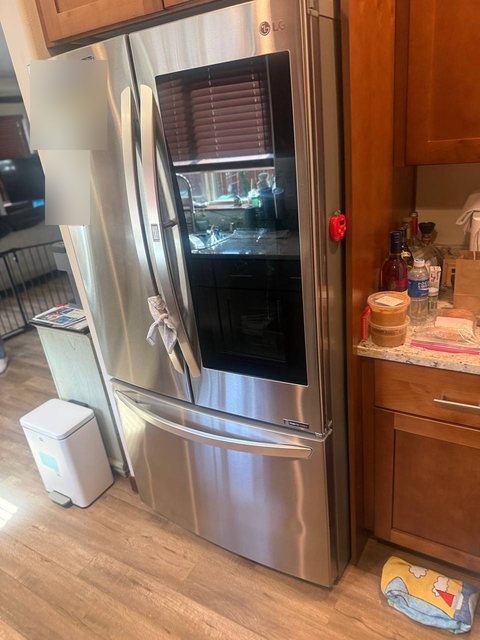
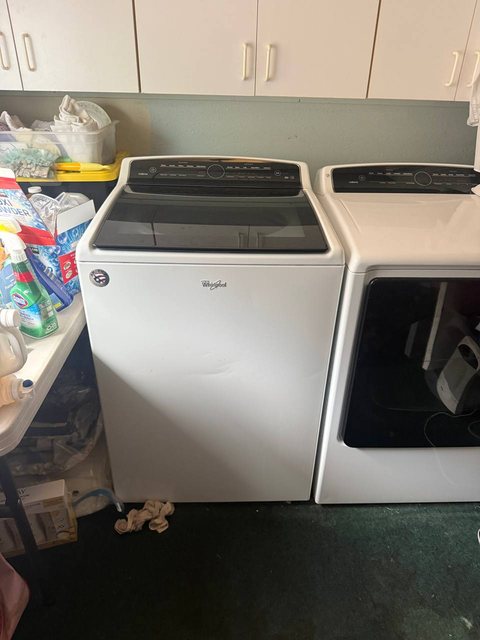
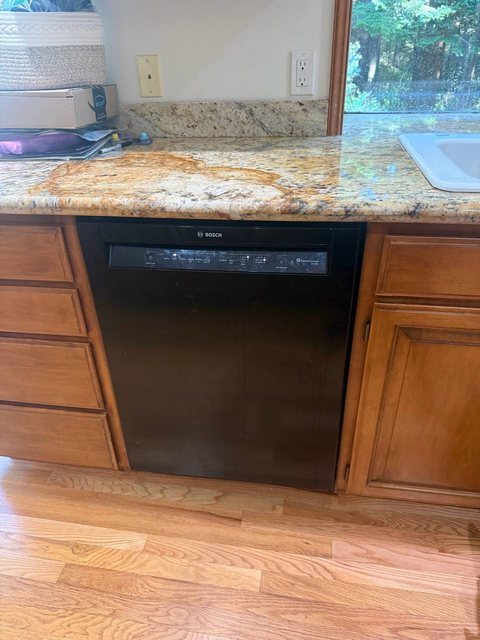
Rosedale, Wollochet, Ray Nash and the roads off Artondale Dr keep us busy with Frigidaire, GE, Samsung, Kenmore, Whirlpool, Maytag, LG, KitchenAid and Bosch ranges, and the waterfront kitchens on Henderson Bay and Burley Lagoon add Wolf, Viking, Dacor and Thermador to the week. We are independent of every one of those makers; when a built-in may still be under the maker’s own coverage we say so before the first screw. Second homes and rentals near the Spit are handled by text: photo of the part, one written figure, approval from wherever the owner is, paperwork by email. A yes means the $99 diagnostic is already counted in that figure; a no means $99 closes the visit. Range repair pricing in Artondale and Purdy is never guessed over the phone and always written down.
Look at the flame on low. Blue and steady means the conversion was done; yellow tips, soot on pan bottoms, a roar that will not simmer or an oven that runs hot mean it was skipped or half done. We confirm with a manometer and the orifice stamp, then finish it: burner orifices, oven orifice, regulator, air shutters.
It can. Portable generators put out rough power that induction boards and electronic oven controls were not built for, and the surge when Peninsula Light restores service adds a second hit. If the display went dark or a code appeared after a storm, we meter the board and elements before you shop for a new range; the fix is usually one board.
Yes, along with Thermador and Dacor. None of those makers counts us as a dealer, and if the maker’s coverage may still apply to your range you hear that from us before work starts. Waterfront igniters and spark electrodes corrode early in salt air, so on those visits the flame and the electrodes are both checked.
No. The hot-surface igniter has weakened until it glows without drawing the amperage that lets the safety valve open. It is about the most routine repair a range gets and rarely takes more than one visit; afterward the oven is run up to temperature while you watch it light on the first try.
A short whiff as the burner catches is common on a slow-lighting burner; a smell that hangs around is not. Shut the burner off, open a window and call. On propane it usually traces to an oversized orifice that floods the burner before the spark catches, or a cracked igniter, and both are same-visit repairs.
Phone or form, either way a dispatcher sends a two-hour window and a text the moment the truck rolls — from Harbor Country Drive, or off the bridge deck for Tacoma stops.
Clamp meter, thermometer, manometer where propane is involved. The failed component is identified and explained, and one figure goes on paper with the $99 built into it.
The truck carries what salt air, iron water and outages break: fill valves, defrost heaters, igniters, rollers, relays. Anything ordered comes back on our schedule, not your bill.
A complete run of the machine while you watch, the floor and panels put back as found, and the warranty term printed on the invoice.
$99 gets the meter on it, the figure goes on the ticket, the part is usually already on board, and the coverage term is printed on the invoice. Same card on both shores of the Narrows.