Also on the truck · Port Orchard
The rest of the lineup
$99 to meter it, one figure on the ticket, coverage printed on the invoice — identical for every machine in Port Orchard.
Towels still damp after the second cycle, or a Port Orchard dryer whose drum turns while the air stays cold: the cause is usually a wet garage-wall vent, an open thermal fuse or an igniter that gave up.
Weekdays 8–6 · Saturday 9–3 · closed Sunday · truck based on 4425 Harbor Country Dr NW
$99 to meter it, one figure on the ticket, coverage printed on the invoice — identical for every machine in Port Orchard.
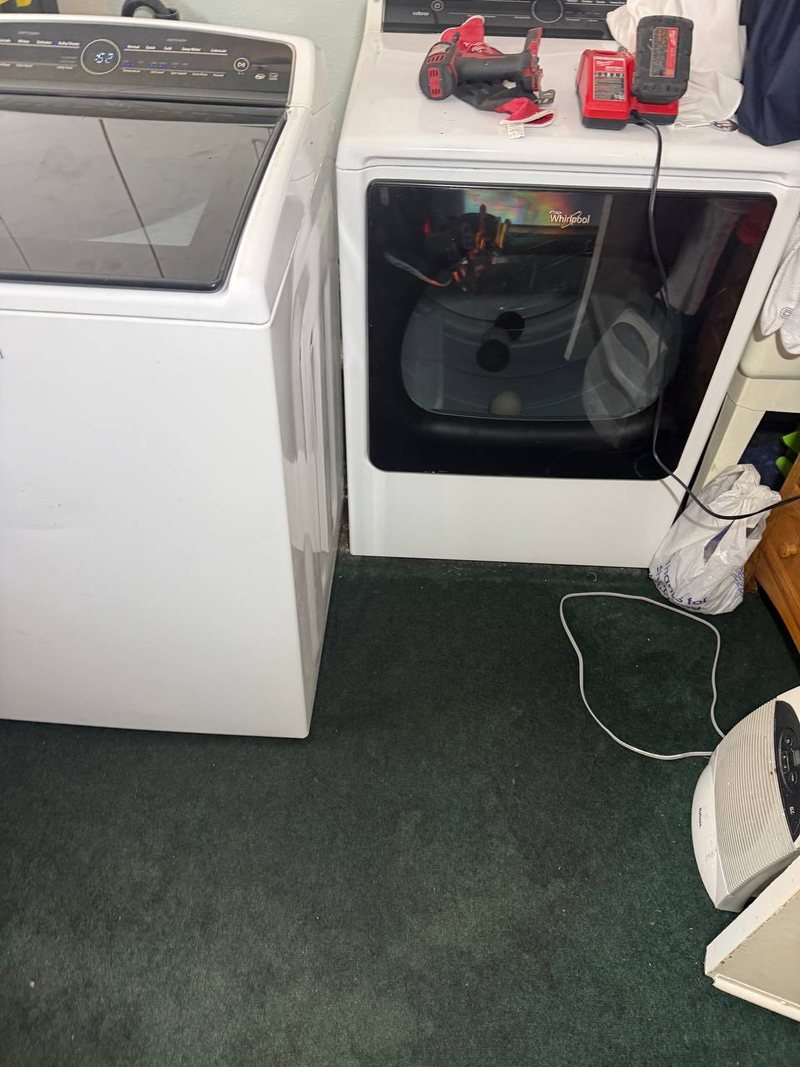
Port Orchard is the one Kitsap County stop on our list, and the drive is nothing but Hwy 16: north from Gig Harbor through Purdy, past the Burley-Olalla exit, off at Sedgwick Rd for the newer subdivisions or on to Tremont for the older streets above Bay Street and the marina. From there the calls fan out to McCormick Woods, along Mullenix toward Manchester and down toward the Southworth ferry. In houses dating anywhere from the 1970s to the 2000s, the utility room sits off the garage, and the dryer vents through the garage wall or up through the roof. Fuel is mixed: electric in most of the subdivisions, natural gas on the streets the Bremerton grid reaches, propane on the acreage beyond it.
The Kitsap winter does the damage. From October to May the duct through a cold garage wall never dries between loads, lint clings to it in a wet paste, airflow falls, and the dryer that handled a load in fifty minutes at Labor Day needs two cycles by January and opens its thermal fuse by February. Gas igniters and coils on a decade-old dryer fail on their own schedule; propane dryers that arrived from a natural-gas house and were never converted burn a soft yellow flame and drop the burner mid-cycle. Rollers flatten, idler pulleys groove, and the resulting thump carries through the wall into the living room. Each is a separate part with a separate test, and most of them travel with us.
Airflow, almost without exception. A crushed foil hose behind the dryer, a garage-wall run lined with damp lint, a hood flapper stuck with fuzz. The flow is measured at the dryer and again at the hood, the reachable length is cleared, and if a roof run calls for a brush longer than the one we carry, we tell you so outright instead of charging for a part that cannot cure it.
Electric: thermal fuse, heating element or one lost leg of the 240 volts at the receptacle. Gas or propane: igniter, coils or flame sensor. Each is metered in order rather than replaced on a guess, and once the new part is fitted, airflow is read a second time, because the fuse opened for a reason and the reason is usually the vent.
Coils that lift the gas valve cold and let it fall once warm, a flame sensor at the end of its life, a high-limit thermostat opening because the duct is blocked, or a propane dryer running a natural-gas orifice. The burner is watched through an entire cycle before anything is condemned, since coils that die at temperature look healthy for the first several minutes.
Flattened rollers, a grooved idler pulley, a glide scraped through to metal. These are truck-stock items and the job normally finishes in one stop. With the drum out, belt, blower wheel and drum seal all get inspected, because they age together and doing them now beats a second visit later.
Lint sitting on the element or packed into the burner housing, or a seized roller with the belt grinding across it. The cabinet comes apart, element and blower are cleaned, the drive is checked along with the rollers, then a timed cycle runs with the exhaust temperature logged. A strong smell means keep the dryer switched off until we arrive.
A motor stalling once warm, a door switch that thinks the door is open, or a belt switch that slack has tripped. On the meter they read nothing alike, and not one of them condemns the dryer. Each is tested before one is named, and the control board waits its turn at the end.
The visit begins at the outside hood, because an airflow number there frequently accounts for the complaint before anyone touches the dryer, and it decides whether a new part will survive. Then the receptacle: a 240-volt circuit missing a leg produces a dryer that tumbles cold, and that is a breaker or an outlet, not a dryer; you hear that from us instead of buying a part. The cabinet opens after that. The meter then visits, in the order the symptom suggests, thermal fuse and high-limit, heating element on electric or igniter, coils and flame sensor on gas, and lastly the drive motor; on propane the flame color is watched while the burner runs. Rollers and the idler are turned by hand. You learn the plain name of what failed, and the one figure that goes on paper already accounts for the $99 diagnostic. Common parts are on the truck.
Samsung, Whirlpool, LG, Maytag, Kenmore, GE, Amana, Electrolux and Speed Queen dryers fill most Port Orchard days, and now and then a ventless Miele or Bosch condenser model in a hallway closet. Households on a shipyard schedule can take the eight o'clock window or the last one of the afternoon so the visit misses the shift. For rentals near the foot ferry to Bremerton or out by the Southworth dock, the owner gives approval by text and the photo, invoice and warranty arrive by email. Approve the work and the figure you approved absorbs the $99 diagnostic; should the answer be no, the visit is settled at $99. Port Orchard dryer repair gets a figure only once the diagnostic is done, on paper, never as a phone estimate.
Yes. Port Orchard is our Kitsap County stop, a direct run up Hwy 16 from the shop with no mileage or trip charge attached. A dryer with no heat gets a slot within the week and frequently the next day, Saturday mornings included, and the trip is shorter than most people in South Kitsap assume.
The vent is wet. A run through the garage wall, or one climbing to a roof jack, stays damp from October to May, lint sticks fast and the dryer can barely exhale. Airflow is measured on every call and the reachable section cleared; a long roof run sometimes wants a dedicated cleaning, and you hear that from us directly rather than after a part fails.
Yes. Beyond the Bremerton grid most of South Kitsap dries on propane, and a dryer moved in from a natural-gas kitchen needs a propane orifice and the regulator switched over. We check flame color, orifice and regulator, correct whatever was skipped, then let the burner run a complete cycle to prove it holds.
Stop replacing it and find the heat. A fuse opens because the dryer ran hotter than designed, which points at a choked vent or a cycling thermostat that no longer opens. The fuse is replaced, the cause corrected and the airflow measured again so the improvement is a number on the invoice rather than an impression.
Our first slot opens at eight and the last runs to six, with Saturday mornings on top. Let us know when you leave for the yard or when you get home and the appointment is placed on the other side of it; the technician texts when the truck leaves Gig Harbor so you are not waiting on the porch.
Phone or form, either way a dispatcher sends a two-hour window and a text the moment the truck rolls — from Harbor Country Drive, or off the bridge deck for Tacoma stops.
Clamp meter, thermometer, manometer where propane is involved. The failed component is identified and explained, and one figure goes on paper with the $99 built into it.
The truck carries what salt air, iron water and outages break: fill valves, defrost heaters, igniters, rollers, relays. Anything ordered comes back on our schedule, not your bill.
A complete run of the machine while you watch, the floor and panels put back as found, and the warranty term printed on the invoice.
$99 gets the meter on it, the figure goes on the ticket, the part is usually already on board, and the coverage term is printed on the invoice. Same card on both shores of the Narrows.