Also on the truck · Port Orchard
The rest of the lineup
$99 to meter it, one figure on the ticket, coverage printed on the invoice — identical for every machine in Port Orchard.
A gas oven off Bethel Rd that glows for twenty minutes without lighting, a coil-top near the Port Orchard marina stuck on high, a propane range past Mullenix sooting every pan: three generations of cooking, one meter, and a number on paper before anyone touches a part.
Weekdays 8–6 · Saturday 9–3 · closed Sunday · truck based on 4425 Harbor Country Dr NW
$99 to meter it, one figure on the ticket, coverage printed on the invoice — identical for every machine in Port Orchard.
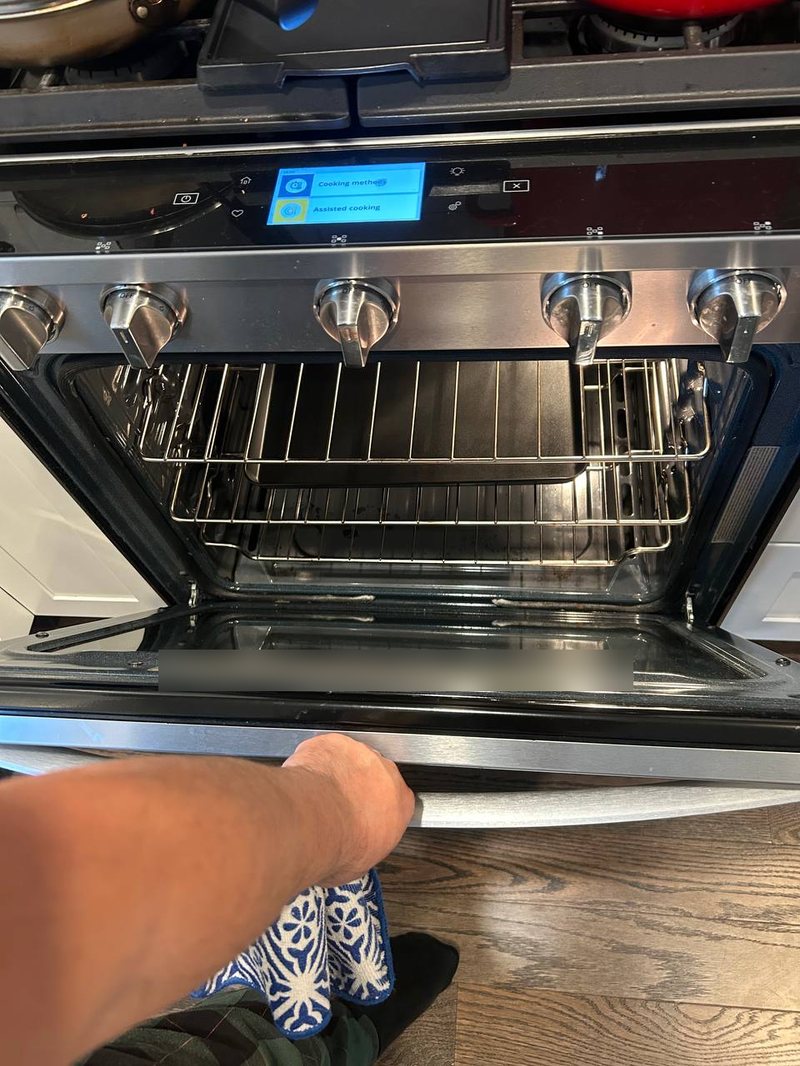
Natural gas in South Kitsap follows the Bremerton grid, and it thins out fast once you leave Bay Street and the Tremont corridor. Off Sedgwick, Bethel and Mullenix a good share of houses cook on a tank, and a range bought off a showroom floor and set down in that kitchen without a conversion kit will light, burn yellow, blacken pans and refuse to simmer. In town the older houses above Sinclair Inlet still run coil-top electrics from the 1970s and 80s, and the newer neighborhoods have glass-top electrics and gas ranges hitting igniter age together. The truck reaches all of it from Gig Harbor by Hwy 16 into Kitsap County.
The failures here sort themselves by fuel more than by brand. Electric coil-tops lose a burner to an infinite switch that has fused or a receptacle that arced. Glass-tops lose a zone to a radiant element, and after a November windstorm they show a code because the control board took the surge as PSE restored power. Gas ovens stop lighting as the hot-surface igniter ages past the current the valve needs. Propane ranges soot because nobody swapped the orifices. A house in McCormick Woods with a dual-fuel Wolf gets the same approach as a 1960s rental near the foot ferry: measure, name the failed piece, put a number on paper.
The classic unconverted propane range. The gauge goes on the manifold to read pressure, the orifice stamps are checked at each burner, and the regulator cap is inspected to see whether it was ever flipped. We finish the conversion end to end, set the shutters so the flame sits blue and quiet, and confirm low actually holds a simmer before packing up.
A relay or control board that absorbed the surge on restoration. The code is read, then the board and the elements are tested on the meter rather than the display being taken at its word. Elements survive surges nearly every time; boards do not. For most glass-top ranges in the newer Sedgwick and Bethel neighborhoods the board is a single-visit part.
Spark electrodes crack, take on water in a boil-over, or sit under a cap that was put back crooked after cleaning. Each burner’s spark is checked and the module is tested for output before anything is replaced. A wet electrode gets dried and retested; a module is changed only when the electrodes and switches meter sound.
Either the oven sensor has drifted or the board has lost its calibration. We log the real temperature across a full heat-up and two cycles with a thermometer, then the sensor’s resistance is checked against the chart. Sensor reads true, the board is at fault; sensor reads off, the sensor is the part. No component is swapped on a hunch.
A hot-surface igniter that has aged until it draws less current than the safety valve requires to open. We clamp the meter on the igniter circuit, compare the reading to the threshold, and a new igniter comes off the truck. The valve itself is almost never the failure and is not changed as insurance.
An open element, an infinite switch burnt inside, or a coil receptacle that has arced and charred. Element and switch are metered and the terminal block and receptacle are checked for heat damage before a number is written, because a new coil plugged into a scorched receptacle fails at the same terminal within months.
Electric ranges start at the receptacle, since a lost leg of 240 mimics a dead oven. Then each element is metered for resistance, each infinite switch is cycled under the meter, the terminal block and coil receptacles are inspected for arcing, and a thermometer is set against the oven sensor’s reading at temperature. Gas and propane ranges start with the flame: every burner and the oven are lit and watched for color and lift, manifold pressure is gauged, the regulator and orifices are confirmed for the fuel in the house, and igniter current is clamped. A code on the display is treated as a lead, not a conclusion. When the meter has named the part, the part is explained in plain words and one repair figure is written, the $99 sitting inside it.
In the older Port Orchard neighborhoods the electric ranges are mostly Frigidaire, GE, Whirlpool and Kenmore; Samsung, LG, KitchenAid and Bosch fill the newer streets off Sedgwick and Bethel; Wolf, Thermador and Viking show up in McCormick Woods and on the waterfront toward Manchester. We hold no dealership with any of them, and when a built-in may still be under its maker’s coverage, we raise that before any work starts. Shipyard commuters get the earliest and latest slots of the day. A rental owner across the water texts an approval, and the invoice and the warranty reach them by email. The repair you approve already has the $99 diagnostic absorbed within it, a repair you decline leaves $99 owing, no more, and a Port Orchard range gets no price until the diagnostic is complete and the figure is written.
Probably not, or only halfway. A finished conversion means propane orifices at every burner and in the oven, the regulator switched, and the air shutters set so the flame burns blue and holds a simmer. We gauge the pressure and check each of those on the visit, complete whatever was skipped, and run every burner before leaving.
Yes, and gladly. Elements, infinite switches and receptacles meter cleanly and ride on the truck. A 1970s coil-top above Sinclair Inlet with one dead burner is a one-visit repair, and those ranges routinely outlast the cabinets around them.
The hot-surface igniter has weakened with age. The glow is still there, but the current has fallen below what the safety valve needs to open, so gas waits until the igniter finally reaches threshold, if it does. Few range repairs come up more often, and after the swap the oven is run so you can watch it light in under a minute.
Rarely. Surges on restoration knock out relay or control boards and leave a code the display will not clear, while the elements and burners are fine underneath. We test the board and elements before anyone talks replacement, and the repair is usually one board with years left in the rest of the range.
It can. Early windows begin when the shop opens, late windows run until close, and Saturday morning slots exist too. Mention the shift when booking and the appointment is set around it; the technician texts as the truck leaves Hwy 16 so you are not standing at the window.
Phone or form, either way a dispatcher sends a two-hour window and a text the moment the truck rolls — from Harbor Country Drive, or off the bridge deck for Tacoma stops.
Clamp meter, thermometer, manometer where propane is involved. The failed component is identified and explained, and one figure goes on paper with the $99 built into it.
The truck carries what salt air, iron water and outages break: fill valves, defrost heaters, igniters, rollers, relays. Anything ordered comes back on our schedule, not your bill.
A complete run of the machine while you watch, the floor and panels put back as found, and the warranty term printed on the invoice.
$99 gets the meter on it, the figure goes on the ticket, the part is usually already on board, and the coverage term is printed on the invoice. Same card on both shores of the Narrows.