Also on the truck · Port Orchard
The rest of the lineup
$99 to meter it, one figure on the ticket, coverage printed on the invoice — identical for every machine in Port Orchard.
A Port Orchard washer needing half an hour to fill, throwing a code and leaving orange rings at the waterline is fighting Kitsap well water before it is fighting age.
Weekdays 8–6 · Saturday 9–3 · closed Sunday · truck based on 4425 Harbor Country Dr NW
$99 to meter it, one figure on the ticket, coverage printed on the invoice — identical for every machine in Port Orchard.
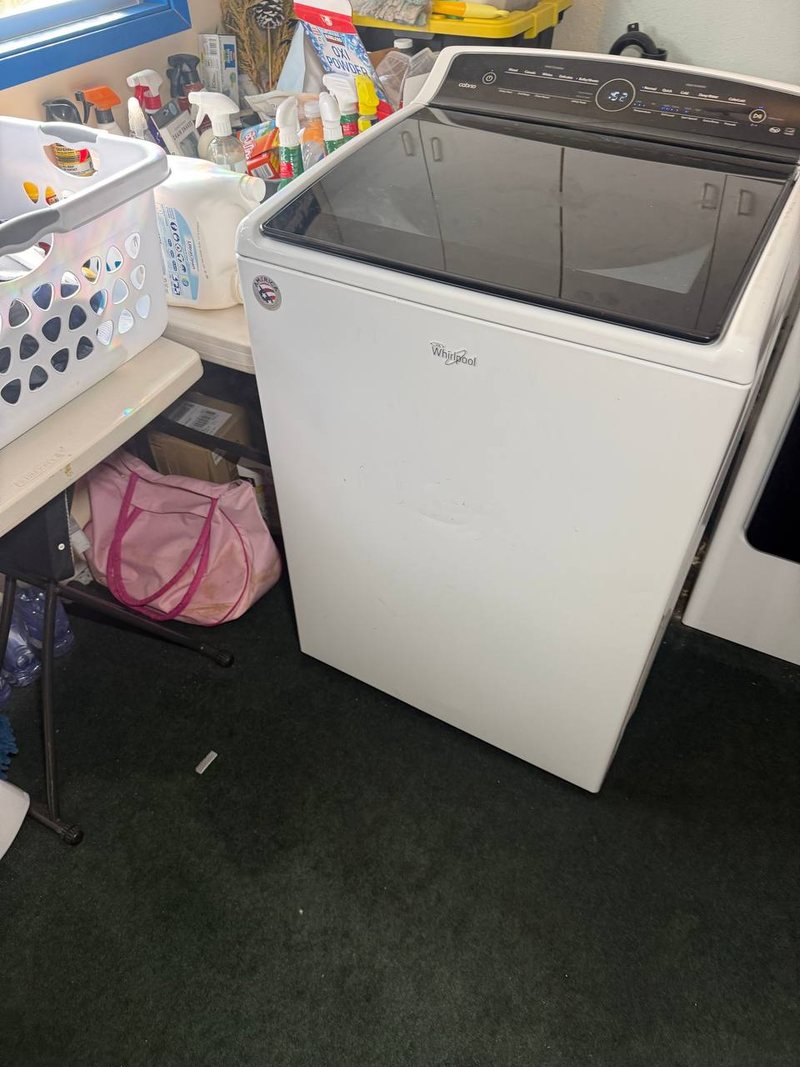
Kitsap PUD water runs to the older houses on the hill above Bay Street, to the marina blocks and through the subdivisions that grew along Sedgwick and Bethel from the 1990s onward, and a washer on that supply ages the way washers do everywhere: a pump clogs, a lock fails, a bearing growls. Follow Mullenix east toward Manchester, or Bethel south toward the county line, and the houses switch to private wells with iron and manganese in the water. There the washer tells on the well: rust rings at the waterline, black grit in the inlet screens, a fill so slow the board gives up and flashes a code. The truck climbs Hwy 16 past Purdy and Burley and leaves the highway at Sedgwick or Tremont.
Consider a 1998 house off Mullenix. The top-loader fills at a trickle and the owner has already priced a new one. Behind the machine, the inlet screens are packed with orange sludge; behind the screens, the valve ports have closed to the width of a needle. Out in the garage, the softener has sat in bypass ever since the spring, when a plumber was in to work on the water heater. Screens cleaned, valve replaced, softener returned to service, and the fill time drops from twenty-five minutes to two. Because nearly every house past the PUD mains drains to a septic tank, the technician also watches the pump move water and looks at the lint trap, then reports what the machine is sending down the line and leaves the drainfield questions to a septic company.
Almost always minerals on a well. Iron grit closes the inlet screens and hardness narrows the valve ports until the board times out. Screens are cleaned, both coils metered, a valve that has closed down is swapped from the truck, and the softener is checked to make sure it is in service rather than bypass. The board is the last suspect on this list, not the first.
A glazed belt, a stripped coupler on an older direct-drive top-loader, an open reading at the lid switch, or at the door lock of a front-loader, or a motor control whose output has quit. Each has a separate meter reading. A coupler or a lock is a same-visit fix; a machine that needs a new board is priced in writing against its age so you can decide with the number in hand.
A stray sock, a hair tie, a wad of lint and iron grit: something is jamming the drain pump, or else its winding has died. The trap comes open and gets cleared, the pump is metered under power, the hose behind the cabinet is checked for a kink, and a dead pump is replaced from the truck. On a septic system that clear drain matters twice over.
Iron and manganese from the well coating the drum and outer tub. The technician tests the fill water, checks the softener and shows you which surface is stained and what a citric-acid clean will and will not lift. A whole-house iron filter does more than any washer part, and replacing a drum over a cosmetic stain is rarely worth the money.
A latch that has failed, or a board convinced the tub is still full because the pressure switch or its hose is fouled. The door is released without breaking the striker, the lock is metered and replaced if it is gone, and a lying pressure sensor is corrected so the new lock does not get blamed for the same fault next month.
A fill hose gone brittle, a door boot split at the fold, a weeping pump seal or a cracked hose between tub and pump. The machine runs with a light aimed at the floor until the drip shows itself; only that part is replaced, and a second full cycle proves the utility room floor stays dry before the invoice prints.
On a Kitsap well the first tool out is a hardness strip, not a screwdriver. Pressure at the hose bib, the color of what sits in the inlet screens and the position of the softener bypass explain a large share of fill codes before the cabinet is touched. On PUD water the technician skips to the machine. A manual cycle runs with the meter moving from the valve coils to the drain pump, on to the lid switch or door lock, then the motor and finally the board. Standing water is traced from pump housing to standpipe; a missing spin is checked first at the lock, then at the drive. The failed part is named in ordinary words and one figure goes on paper, the $99 diagnostic counted within it. For the common brands, the truck carries pumps, valves, locks and belts.
LG, Whirlpool, Samsung, Maytag, GE, Electrolux, Kenmore and Speed Queen account for the bulk of Port Orchard washers on our schedule, along with stacked pairs in the townhomes near the marina and Miele or Bosch compacts in a few McCormick Woods laundry closets. Households with a shipyard commute get the first window of the day or the last. Landlords with rentals near the Bremerton foot ferry approve by text from wherever they happen to be and receive photo, invoice and warranty by email. Give the repair a yes and the $99 diagnostic becomes one piece of the number; give it a no and the $99 stands alone as the charge. Washer repair prices in Port Orchard exist only after the diagnostic, go on paper, and are never quoted from the road.
The parts are the same; the order of suspicion changes. Iron and hardness attack the inlet valve and the screens first, so those are checked before the board is even considered, and a lapsed softener explains a surprising share of fill codes. The fix is usually a valve rather than electronics, which is the cheaper end of the parts list.
It changes what we look at. A pump that barely moves water or a lint trap that never gets emptied pushes grit and undissolved detergent into the tank. The technician confirms that pump and drain path are both clear and mentions it if the load is sending more down the line than it should; the tank itself is a job for a septic company.
Yes. Appointments run from eight in the morning until six, Monday through Friday, with Saturday mornings on top. Mention your shift at booking and the visit lands on the far side of it. The technician sends a text as the truck clears the Sedgwick exit so you are not watching the driveway.
Usually. The door boot holds a ring of water where mold grows, and on a well it also gathers a film of iron slime that no cleaning cycle reaches. The boot, sump and drain hose get inspected; a boot past cleaning is replaced. Leaving the door cracked between loads, plus a lighter hand with detergent, keeps the new one fresh.
Most of it. Pumps, valves, locks, belts and hoses travel on the truck, so the common repairs close the same visit, with the test cycle run to the end. A part on order returns on our schedule, not your bill, and the diagnostic itself usually takes less than an hour.
Phone or form, either way a dispatcher sends a two-hour window and a text the moment the truck rolls — from Harbor Country Drive, or off the bridge deck for Tacoma stops.
Clamp meter, thermometer, manometer where propane is involved. The failed component is identified and explained, and one figure goes on paper with the $99 built into it.
The truck carries what salt air, iron water and outages break: fill valves, defrost heaters, igniters, rollers, relays. Anything ordered comes back on our schedule, not your bill.
A complete run of the machine while you watch, the floor and panels put back as found, and the warranty term printed on the invoice.
$99 gets the meter on it, the figure goes on the ticket, the part is usually already on board, and the coverage term is printed on the invoice. Same card on both shores of the Narrows.