Also on the truck · West End Tacoma
The rest of the lineup
$99 to meter it, one figure on the ticket, coverage printed on the invoice — identical for every machine in West End Tacoma.
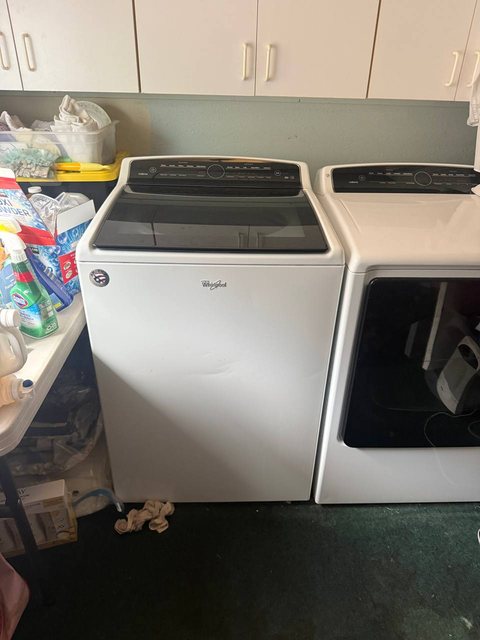
A West End Tacoma dryer that tumbles for an hour and hands back cold towels has usually opened its thermal fuse or lost its igniter, and a lint-choked garage-wall vent is why.
Weekdays 8–6 · Saturday 9–3 · closed Sunday · truck based on 4425 Harbor Country Dr NW
$99 to meter it, one figure on the ticket, coverage printed on the invoice — identical for every machine in West End Tacoma.
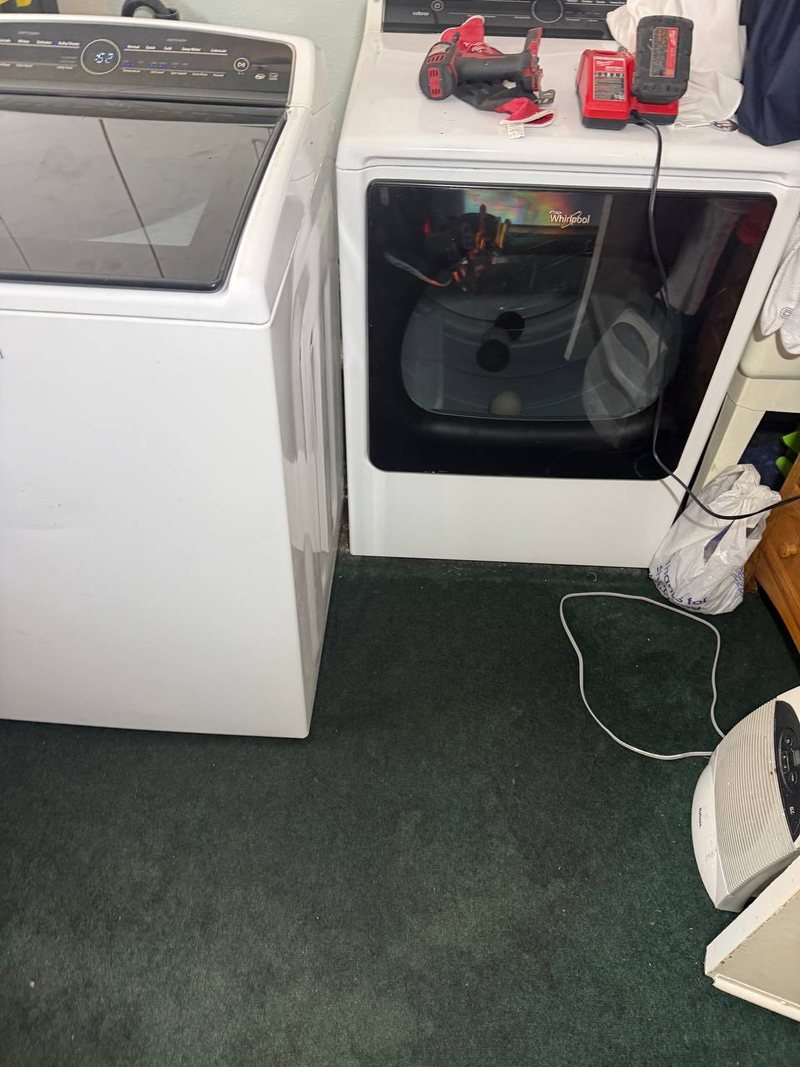
Most West End laundry lives in a utility room off the garage, in a rambler or split-level put up between 1958 and 1975 around Westgate, Skyline and the Highlands. The dryer exhausts through the garage wall, or straight up past the roofline, by way of a foil hose somebody crushed behind the machine in 1992. Tacoma’s soft water has no bearing on a dryer. The wet half of the year does. From October on, the duct never dries between loads, lint sticks to its cold wall like papier-mache, and by January the thermal fuse opens on a dryer that seemed fine at Labor Day. We are on the bridge deck shortly after leaving Point Fosdick, off at Jackson Ave, and in Westgate or down by Titlow Beach soon after.
Here is the shape of a typical Monday: a Whirlpool in a 1966 rambler on the Narrows side of Skyline ran all Saturday and dried nothing. The drum turns, the air is room temperature. If it is electric, suspicion falls on the thermal fuse, on the heating element, or on one dead leg of the 240-volt circuit at the receptacle; if it is gas, off the PSE main that serves the West End, the igniter or the gas coils. Whichever it is, the technician reads the airflow at the exhaust before opening the cabinet, because a new fuse in front of a plugged vent buys about a month. Rollers thump, idlers squeal, glides scrape, and each is a distinct part with a distinct test, carried on the truck.
On electric the fuse, the element, or a receptacle leg that has dropped out; on gas the igniter, the coils or the flame sensor. Each gets metered in sequence rather than swapped on a hunch. Once the failed part is in, the exhaust airflow is read again, since the fuse is only the messenger and the vent wrote the message.
Airflow, nearly every time: a foil transition hose folded flat behind the machine, a garage-wall duct packed with wet lint, a hood flapper glued shut with fuzz. We read the flow at both ends, dryer and hood, clear the reachable length, and offer to swap the foil for rigid duct; if the run needs a longer brush than ours we say so.
Gas coils that lift the valve and cannot hold it once warm, a flame sensor past its prime, or the high-limit opening because the vent is blocked. The burner is watched for a complete cycle before any part is named; coils that die only at temperature pass every test in the first five minutes.
Flat-spotted drum rollers, an idler pulley grooved by the belt, or a snapped glide. Those are truck-stock parts and the job normally wraps up in a single stop. With the drum lifted out, the belt, blower wheel and felt seal get a look, because they age at the same rate and a second trip for them later costs more than doing them now.
Lint resting on the element or packed around the burner, or a belt dragging over a roller that has seized. The cabinet comes open, the element and blower housing are cleaned out, the drive and rollers are checked, and a timed cycle runs while the exhaust temperature is logged. A strong smell means the dryer stays off until the truck arrives.
A motor that stalls once warm, a door switch reading open with the door shut, or a belt switch tripped by a slack belt. They read differently on a meter, and none of them means the dryer is finished. We test each before naming one, and the control board is considered last, after the cheap parts have been cleared.
Outside first. The airflow reading at the exhaust hood on the garage wall or the roof jack usually explains the complaint before the dryer is touched, and it decides whether a part will hold. Next the receptacle: an electric dryer that tumbles cold with one leg of its 240 volts missing is a breaker or outlet problem, not a dryer problem, and we say so. Only then does the cabinet open, and the meter works through the motor, the flame sensor or element, the igniter and its coils on gas, the high-limit and the thermal fuse, whichever the symptom points at. With the drum accessible, rollers and the idler get turned by hand. We name the part that failed, and the one figure we write already counts the $99 diagnostic; the part is usually already on the truck.
GE, Whirlpool, Samsung, Maytag, LG, Kenmore, Amana, Electrolux and Speed Queen dryers make up most West End work, gas and electric alike, plus the odd Bosch or Miele condenser unit in a hallway closet nobody could vent. For rentals near Tacoma Community College and along 6th Ave the owner signs off by text, and the paperwork, invoice and warranty together, arrives by email. The bridge crossing is our expense and never reaches the bill. Say yes and that figure absorbs the $99 diagnostic; decline and $99 ends the invoice. A West End dryer repair gets its price on paper after the diagnostic, never as a phone estimate.
The vent is damp. A duct through a garage wall, or one that climbs to a roof jack, never dries out between October and May, wet lint clings to it and the airflow falls until the dryer is breathing through a straw. We read the airflow on every call, clear the section within reach, and say plainly if the full run needs someone with a longer brush.
No. The toll is collected eastbound and it is simply the cost of running a truck into Tacoma. Your invoice carries two lines, diagnostic and repair, priced from the same card we use on Point Fosdick or Fox Island, and the written warranty does not change with the side of the Narrows.
Rarely. An electric dryer usually needs a thermal fuse or an element, a gas dryer an igniter or a set of coils, and every one of those is truck stock. The receptacle and the vent are checked in the same visit, because either can produce the symptom and neither is cured by a new part, no matter how new.
You can, but it will keep opening. The fuse blows because the dryer got hotter than it should, which points to a restricted vent or a cycling thermostat stuck closed. We change the fuse and cure the cause, then read the airflow again so you can see the difference as a figure instead of a guess.
Yes. The first window opens at eight, the last runs to six, and Saturday mornings are available as well. Tell us when you need to be on Hwy 16 and we book around it; a dryer call that starts at eight is usually wrapped up before the morning traffic on the bridge deck thins out.
Phone or form, either way a dispatcher sends a two-hour window and a text the moment the truck rolls — from Harbor Country Drive, or off the bridge deck for Tacoma stops.
Clamp meter, thermometer, manometer where propane is involved. The failed component is identified and explained, and one figure goes on paper with the $99 built into it.
The truck carries what salt air, iron water and outages break: fill valves, defrost heaters, igniters, rollers, relays. Anything ordered comes back on our schedule, not your bill.
A complete run of the machine while you watch, the floor and panels put back as found, and the warranty term printed on the invoice.
$99 gets the meter on it, the figure goes on the ticket, the part is usually already on board, and the coverage term is printed on the invoice. Same card on both shores of the Narrows.