Also on the truck · West End Tacoma
The rest of the lineup
$99 to meter it, one figure on the ticket, coverage printed on the invoice — identical for every machine in West End Tacoma.
One coil on a West End Tacoma range stays cold, or the oven climbs to 300 and stalls.
Weekdays 8–6 · Saturday 9–3 · closed Sunday · truck based on 4425 Harbor Country Dr NW
$99 to meter it, one figure on the ticket, coverage printed on the invoice — identical for every machine in West End Tacoma.
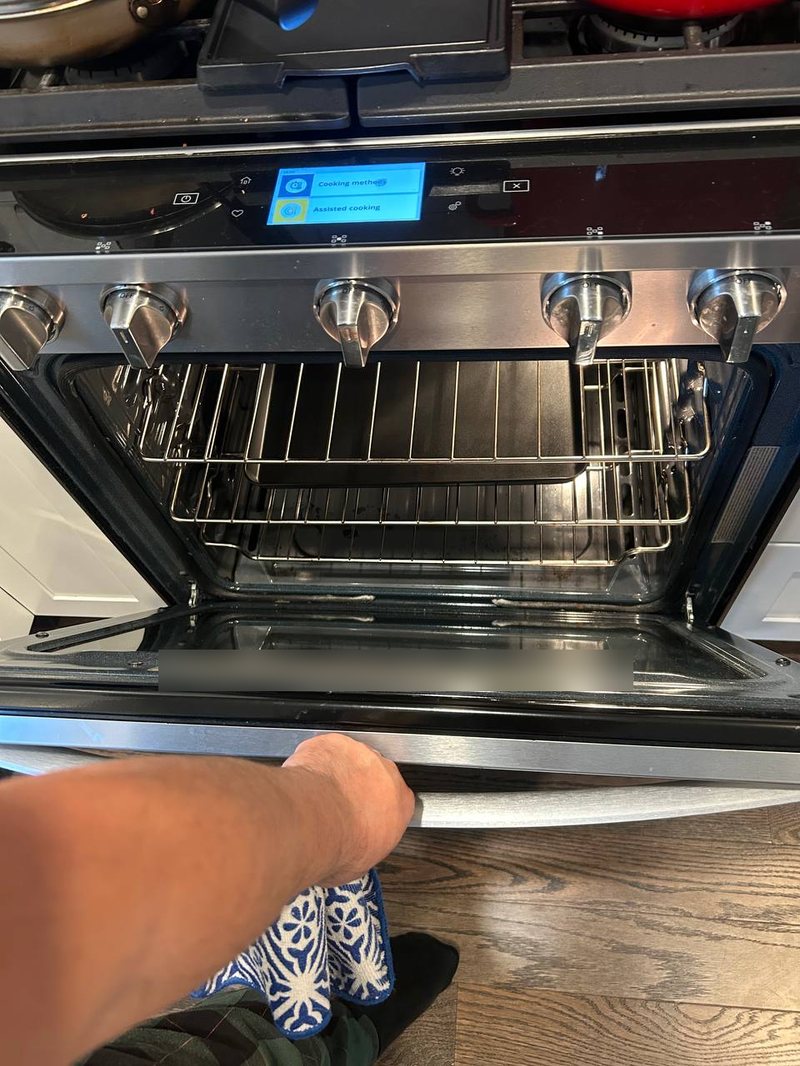
A West End rambler from 1964 came with a 240-volt range receptacle in the kitchen wall and nothing else, and plenty of them still cook that way: a coil-top that has outlived the original owners, a glass-top fitted in the last remodel, an induction cooktop here and there in the newer houses along the Narrows bluff and by Narrows Marina. PSE gas mains do reach the West End, and gas ranges show up wherever a kitchen was gutted in the last twenty years, especially in the Highlands and up on Skyline. From the shop it is the bridge deck, then Jackson Ave, then 6th Ave or Pearl St toward Tacoma Community College and down the hill to Titlow Beach. The eastbound toll is ours.
What breaks on an electric range is cheap to test. A coil element opens at the spot where it always glows brightest. The infinite switch behind a knob welds shut and that burner will only run flat out. The bake element in an oven used nightly since the Reagan years finally parts. One zone on a glass-top goes dark. After a November windstorm the power returns with a spike and leaves the control board blinking a code or showing nothing. In the gas kitchens the story is igniters that weaken and spark modules that quit, and in the houses that face the Narrows, salt air pits the spark electrodes early.
The element has opened, the infinite switch has burnt, or the receptacle under a coil has arced and lost its grip. We meter the element, test the switch and inspect the receptacle and terminal block for scorching before anything goes on paper; a fresh coil seated in a charred receptacle fails at that same terminal inside a few months.
The infinite switch has welded its contacts and can no longer pulse the element on and off. The meter confirms it, the switch is replaced from the truck, and the knob shaft and the wiring behind the panel get a look for heat damage. The element is nearly always sound and is left where it is.
On electric, an opened bake element or a relay board whose contacts have stopped closing; on gas, a hot-surface igniter glowing too weakly to open the valve. We read element resistance or igniter current against the spec, fit the part, then run the oven with a thermometer inside so you watch it climb and hold.
Either the temperature sensor has wandered off spec, or the board’s calibration has. We log the true oven temperature through a full cycle and read the sensor’s resistance at each point; if the sensor tracks the thermometer the board is at fault, and if it does not the sensor is. Nothing gets replaced on a guess.
A control or relay board that took the surge when PSE came back on. We meter the board first, then each element and finally the sensor, before anyone talks about replacing the range, because elements shrug off a surge and a board for most common models rides on the truck. Photograph the code if it appears; it saves time on the phone.
A spark electrode that is cracked or wet, a spark module on its way out, or a burner cap set off-center after a scrub. We check spark at each burner and test the module, dry and reseat what needs it, and on the houses facing the Narrows look hard at the lead connectors, where a green terminal often gets a working module blamed.
Electric range first, since that is most of the West End: the technician confirms that the receptacle carries 240 volts across both legs, because an oven that will not warm while the clock keeps time is often a breaker with one pole tripped. Then every element is metered for resistance, every infinite switch is cycled under test, the coil receptacles and the terminal block are examined for arcing, and the oven sensor is compared with a thermometer. On gas, each burner and the oven get lit and observed for a steady blue flame, manifold pressure is measured and the igniter’s current draw is read. The failure gets an ordinary-words name, and the single figure we put on paper already carries the $99 diagnostic. Common elements, switches, sensors and igniters ride on the truck.
GE, Frigidaire, Whirlpool, Samsung, LG, KitchenAid, Maytag, Bosch and Kenmore ranges fill the West End schedule, and the Viking, Wolf and Thermador ranges in remodeled kitchens on the Narrows bluff take the rest. None of these makers lists us as a dealer, and when a built-in might still be under the maker’s own coverage you hear that from us first. Landlords with rentals near Tacoma Community College text back an approval and find the invoice and warranty in their email. The toll we pay at the bridge never reaches an invoice. Once you approve, the $99 diagnostic is absorbed by the written figure; should you decline, your bill stops at $99. Range repair pricing in West End Tacoma goes on paper only after the diagnostic, never before it.
Easily, and it is among the quickest range repairs there are. The infinite switch behind that knob has welded closed and can no longer pulse. We prove it with the meter, fit a new switch from the truck and leave the element alone, since it is almost never the problem; the whole thing is done in one visit.
No. The toll is charged going east and we absorb it as part of driving into Tacoma; no invoice we write has a line for it. A range repair in the Highlands is priced from the same card a kitchen on Point Fosdick sees, and the figure is on paper before the work begins, not totaled after.
Usually not. When PSE restores power the return surge tends to take a relay board or the main control board, leaving the oven dead while the burners still work. We meter the board, then the elements, before anyone makes a decision, and most of the time a single board puts the range back in service for years.
Yes. Induction faults come down to a generator board, a cooling fan that has seized or a touch panel that stopped responding, and each is metered like anything else. Give us the brand and model when booking so the right board is on the truck, and note any code the display showed before it went dark.
Yes. Wolf, Thermador and Viking are all on our list, and we hold no dealer status with any of the three; should the maker’s coverage still apply, we tell you before touching it. In kitchens facing the Narrows the spark electrodes and igniter leads corrode ahead of schedule, so those get inspected on every visit alongside the igniters.
Phone or form, either way a dispatcher sends a two-hour window and a text the moment the truck rolls — from Harbor Country Drive, or off the bridge deck for Tacoma stops.
Clamp meter, thermometer, manometer where propane is involved. The failed component is identified and explained, and one figure goes on paper with the $99 built into it.
The truck carries what salt air, iron water and outages break: fill valves, defrost heaters, igniters, rollers, relays. Anything ordered comes back on our schedule, not your bill.
A complete run of the machine while you watch, the floor and panels put back as found, and the warranty term printed on the invoice.
$99 gets the meter on it, the figure goes on the ticket, the part is usually already on board, and the coverage term is printed on the invoice. Same card on both shores of the Narrows.