Miele machines measure everything, and on Fox Island the water they measure comes from a well through a softener.
Weekdays 8–6 · Saturday 9–3 · closed Sunday · truck based on 4425 Harbor Country Dr NW
Refrigerator & Freezer Repair$99 diagnostic · one figure, written
Washer Repair$99 diagnostic · one figure, written
Dryer Repair$99 diagnostic · one figure, written
Dishwasher Repair$99 diagnostic · one figure, written
Oven, Range & Cooktop Repair$99 diagnostic · one figure, written
Ice Maker Repair$99 diagnostic · one figure, written
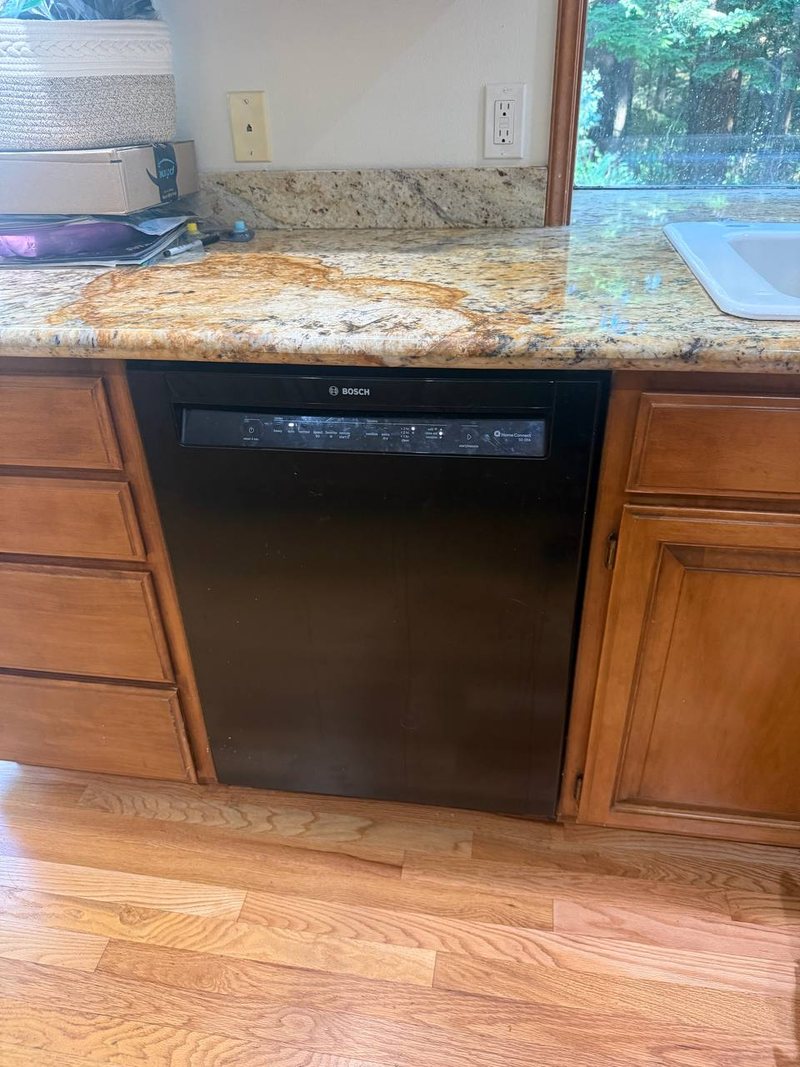
Miele goes into Fox Island houses as a set of quiet appliances that nobody expects to think about: a G-series dishwasher paneled to match the cabinets in a kitchen looking over Hale Passage, a W1 and a T1 heat-pump dryer side by side in a laundry room with its own view, and increasingly a second dishwasher in the pantry for the summer crowd. These are sensor-driven machines. The dishwasher judges the load by how fast the water clears, the washer meters its fill through a flow sensor, the dryer decides it is done when the moisture bars say so. That makes them efficient and it makes them honest, because every deviation gets logged. The fault memory is where a Fox Island diagnosis begins.
What deviates on the island is the water. Every house is on a private or shared well, and most run a softener and an iron filter ahead of the house, which suits a Miele well right up to the day the salt bin sits empty or the resin bed is due for service. Then the dishwasher’s hardness setting no longer matches what arrives, glasses turn cloudy in a week, and the heater picks up a crust. Iron that slips past the filter tints the tub and the washer drum a faint orange. Every drain on Fox Island ends in a septic tank, so a slow-draining dishwasher deserves a look before the field does. A generator carrying the house through a winter storm can hand the W1 an electronics fault worth reading rather than guessing at.
| Unit | Typical sign | Likely cause | Our fix |
|---|---|---|---|
| G-series dishwashers behind panels | Cloudy glasses, white crust on the heater and racks | House softener out of salt, or the dishwasher’s hardness setting below the water’s real number | Test the water at the tap, reset the hardness level, fill the internal salt reservoir if fitted, run a descale program |
| Dishwashers with AutoDos PowerDisk | Detergent light on, dishes come out dull | PowerDisk empty or its dispenser motor sticking, sometimes iron residue in the housing | Cycle the dispenser, clean the housing, fit a fresh disk, confirm the dose registers during a program |
| W1 washers with TwinDos | Cartridge light on, whites gray, detergent smell in the drum | TwinDos lines airlocked or crystallized, dosing pump not delivering | Purge and clean both lines, test the dosing pumps, recalibrate, run a maintenance program |
| W1 washers on a well pump | Fill stops short, intake fault on the display | Flow sensor sees too little water because the pump lags or the screens are gritted | Read the flow sensor output, clean the screens, meter the inlet coils, time a fill at the well’s real pressure |
| T1 heat-pump dryers in view-home laundries | Program runs for hours, towels come out cool | Plinth filter and condenser matted with lint, moisture bars coated with residue | Open the plinth, clean the condenser fins, wash the filters, scrub the sensor bars, measure loop temperatures |
| Dishwashers draining to septic | Slow drain, occasional drain code, standing water | Drain pump chamber holding grit and glass, non-return valve stuck, hose sagging | Empty the pump chamber, unstick the valve, restore the hose high loop, run a drain test, note the detergent dose |
| Code / indicator | What it means | What we do |
|---|---|---|
| F11 | Drain fault: water stayed in the sump past the program’s allowance | Open the drain pump chamber, unstick the non-return valve, inspect the hose loop, time a drain into the septic line |
| F13 | Intake fault: fill volume arrived too slowly for the flow sensor | Check well pressure at the laundry tap, clean gritted screens, meter the inlet coils, verify the flow sensor count |
| F24 | Heating fault: the heater or its relay failed the control’s check | Meter heater resistance, test its relay at the power module, check the pressure sensor, replace what tested wrong |
| F53 | Speed fault: the motor did not report the rpm the control asked for | Read the tacho signal, meter the motor windings, look for green on the plug, replace whichever fails |
| F70 | Water in the base: the float switch tripped under the machine | Find where it drips, whether hose, seal or pump housing, dry the pan, fit the replacement, retest under load |
Every Miele carries a record of its own life, and on Fox Island we open it before a screw comes out: stored faults, hours run, how many programs ended early. A dishwasher that has logged a drain fault every week since spring tells a different story from a washer that tripped once the night the power failed. Then the meter follows the story: drain pump windings, inlet coils, heater resistance, tacho signal, lock contacts, and on a T1 the temperature drop across the condenser. Pumps, valves, locks, filters, TwinDos cartridges and sensor cleaning kits ride across the Fox Island Bridge with us. Power modules and heater assemblies are ordered against the serial number, and the return visit to fit them carries no second trip fee.
Narrows Appliance Pro is an independent Gig Harbor repair shop. We do not sell Miele, were not appointed by Miele, and use no title of theirs. A W1 and T1 installed in a recent Fox Island build may still be within the maker’s own coverage, and if the serial number suggests that, you hear it from us before the diagnostic rather than after the bill. Many of these houses see their owners on alternate weeks, so we take the gate code, work while the house is empty, text a photo with one written figure, and wait for the yes. Your inbox gets the invoice with the warranty printed on it. That figure already counts the $99; a no from you means $99 settles the visit. The meter speaks first; only then does a price exist, and it exists on paper.
Whatever the water measures after your softener, not before. We test at the kitchen tap and set the machine to that number. An empty salt bin pushes that reading high, and no hardness setting on the dishwasher will hold it for long. We tell you plainly when the softener is the real problem, and set the machine for the water you actually have.
Yes, as long as the water is softened. TwinDos meters liquid detergent by the load and the sensed soil, and hard or iron-bearing water asks more of it than it can give, so whites gray and the cartridge light nags. We purge and clean the dosing lines, test the pumps and recalibrate, then check that the softener is keeping up.
Check the machine first, because that is the cheap answer. Grit from the well and shards of glass collect in the drain pump chamber, the non-return valve sticks, and a hose with no high loop lets water sit. We clear all of that and time a drain. If the machine drains clean and the sink still gurgles, the septic question goes to a septic contractor, not to us.
Yes, leave it off until we arrive. A portable generator’s uneven output can leave a fault the control cannot clear on its own, while the surge when the utility returned can damage the power module outright. Reading the fault memory tells us which happened. We test the module on clean power before anything is ordered, and the answer goes to you in writing.
That is our usual arrangement on the island. The gate code or lockbox gets us in, you receive a photo and one written price by text, and we proceed when you answer. The invoice, warranty term printed on it, reaches you by email. A T1 that has sat idle for weeks gets its filters and condensate path cleared on the same visit, because that is what a long gap does to it.
Phone or form, either way a dispatcher sends a two-hour window and a text the moment the truck rolls — from Harbor Country Drive, or off the bridge deck for Tacoma stops.
Clamp meter, thermometer, manometer where propane is involved. The failed component is identified and explained, and one figure goes on paper with the $99 built into it.
The truck carries what salt air, iron water and outages break: fill valves, defrost heaters, igniters, rollers, relays. Anything ordered comes back on our schedule, not your bill.
A complete run of the machine while you watch, the floor and panels put back as found, and the warranty term printed on the invoice.
$99 gets the meter on it, the figure goes on the ticket, the part is usually already on board, and the coverage term is printed on the invoice. Same card on both shores of the Narrows.